
Key takeaways:
Partly completed machinery is a functional component (e.g. a drive system or robot module) that only begins to perform its function once integrated into a complete system.
- Partly completed machinery under 2006/42/EC is “almost machinery,” but it cannot by itself perform a specific task
- It is intended to be incorporated into another machine or integrated into a larger system subject to conformity assessment
- It does not bear the CE marking because, as a standalone product, it does not meet the full requirements.
- It must be supplied with technical documentation, a Declaration of Incorporation, and information for safe integration.
- The assessment includes, among other things, risk analysis, safety-based design, documentation, and verification testing.
Before any equipment is placed on the EU market, it must meet specific requirements. A partly completed machine, although ready for integration, requires a dedicated assessment before it can operate as part of a larger system. So what steps do you need to take before incorporating it into your production line?
A partly completed machine, even if it is functionally ready for operation, cannot be treated as a finished product. Under the Machinery Directive and Machinery Regulation 2023/1230/EU, it must be integrated into a larger system that is itself subject to conformity assessment. The absence of CE marking follows from the fact that it does not meet the full requirements as a standalone product, but rather as a component of a system.
Definition and Basics
According to Machinery Directive 2006/42/EC, a partly completed machine is an assembly that is almost a machine but cannot by itself perform a specific application. Such a subassembly, for example a drive system, is intended to be incorporated into a larger system or combined with another machine to create a complete arrangement capable of operating.
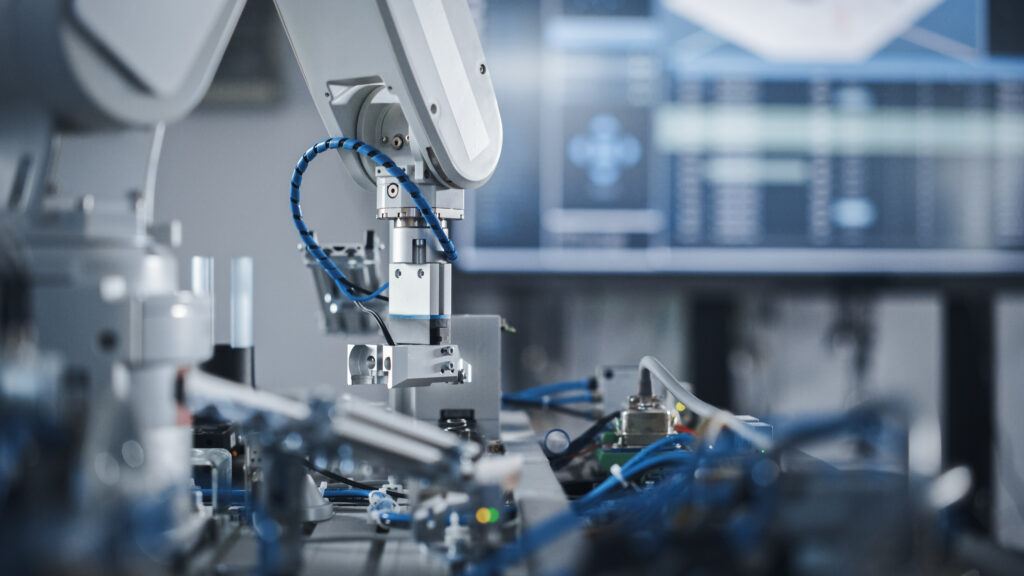
In practice, this means that a partly completed machine is a fully functional component, but it does not operate independently. Only after integration with other components, for example within a production line, can it perform its tasks. One example is an industrial robot module that does not function on its own, but becomes an important part of the production process once integrated into the system.
Requirements for partly completed machines under Directive 2006/42/EC
Directive 2006/42/EC clearly sets out the requirements for partly completed machines. Every partly completed machine must be supplied with the appropriate technical documentation and a declaration of incorporation confirming that it is intended to be built into another machine and cannot operate independently. Unlike completed machines, it is not subject to CE marking. However, it must meet all essential safety requirements applicable to the machines into which it will be incorporated.
The manufacturer of a partly completed machine is required to provide all necessary information enabling the user to correctly and safely incorporate the partly completed machine into a complete system. This includes assembly instructions, operating instructions, as well as risk analyses related to the use of the partly completed machine.
Use of partly completed machines in industry
Partly completed machines are widely used across various industrial sectors, especially where there is a need to create complex systems from multiple components. Examples include production lines, internal transport systems, automated assembly systems, and industrial robotics.
For example, in the automotive industry, a partly completed machine may be an assembly module that forms part of a car production line. In the FMCG industry, it may be an internal transport system that moves raw materials to different processing stations. Integrating such machines enables flexible and efficient management of production processes.
| Type of partly completed machinery | Description | Examples of use |
|---|---|---|
| Industrial robot module | A mechanical and electronic assembly that cannot perform tasks on its own, but becomes a functional part of a production line once integrated with another system. | Assembly line in the automotive industry, production automation in the electronics industry. |
| Drive system | An engine or motor (combustion or electric) supplied as a component ready to be built into a larger machine. | Agricultural machinery, industrial equipment, specialist vehicles. |
| Internal transport system | Conveyors and transport systems that cannot operate independently and form part of a larger logistics system. | Food industry, warehouses, distribution centres. |
| Power supply and control modules | Power or control units that require integration with other components in order to operate. | Production lines, automation systems. |
| Manipulators and grippers | Devices designed to handle objects that operate only when connected to a control and drive system. | Industrial robotics, automated warehouse systems. |
| CNC machine subassemblies | Components such as spindles and rotary tables that must be integrated into the complete CNC system. | Machine tools, milling machines, lathes in the metalworking and woodworking industries. |
| Protection and safety systems | Light curtains and safety scanners that must be installed in the context of the complete machine or production line. | Industrial automation, robotic workstations, production lines. |
Conformity assessment of partly completed machinery
The conformity assessment of partly completed machinery is a process that ensures the machine meets all health and safety requirements set out in Directive 2006/42/EC. This process includes risk assessment, design in line with safety principles, preparation of technical documentation, and verification testing.
Risk assessment identifies potential hazards associated with the use of partly completed machinery and defines measures to reduce those hazards. The technical documentation must be accurate and cover all aspects of the machine’s design and operation, as well as the results of the risk assessments carried out.
Technical documentation for partly completed machinery
Technical documentation is an integral part of the conformity assessment process for partly completed machinery. It should contain detailed information on the machine’s design, construction, and operation. Technical documentation includes technical drawings, electrical diagrams, functional descriptions, and the results of risk assessments.
The Declaration of Incorporation, which forms part of the documentation, confirms that the partly completed machinery is intended to be incorporated into another machine and cannot operate independently. This documentation must be available to the user to enable correct integration of the machine into a complete system.
Purpose of the concept
Flexibility in design and construction
A modular approach to machine building makes it possible to create complex systems flexibly and adapt them to changing production needs. This allows new technologies to be adopted quickly and existing solutions to be modified without the need for a complete rebuild.
Standardisation and compliance with standards
Each module must meet safety requirements and be properly documented. This makes later integration with larger production systems easier and helps ensure safety and compliance with legal requirements.
Cost optimisation
Modules can be expanded in stages, allowing better cost control and investment in the development of the production system as needs grow.
Examples of partly completed machinery and their role in production
Partly completed machinery, often without its own control systems, is widely used in industry as a key component of larger production systems. Here are a few examples:
- Industrial robots – on their own, they do not perform operations until they are integrated with the appropriate tools, such as grippers or welding units, and a control system.
- Drive systems – used in lifts and transport systems that require integration with other components in order to operate.
- Packaging machines – if they do not have their own control system, they must be integrated into a production line to carry out their packaging functions.
- Conveying systems – for example, belt conveyors that must be synchronized with the rest of the equipment in the plant through a central control system.
- Welding arms – in steel plants, they only operate once connected to control units and the appropriate software that manages the welding process.
- Assembly manipulators – used in the automotive industry, they must be integrated with the production line control system to perform precise assembly operations.
- Dosing machines – in the chemical or food industry, they can only dose ingredients accurately once integrated with the rest of the system.
- AGVs (automated guided vehicles) – on their own, they are not autonomous and require integration with a central warehouse logistics management system.
- Refrigeration systems – often used in the food industry, they must be incorporated into a broader production environment control system.
- Mechanical presses – require integration with safety and control systems to meet operational and production-line safety requirements.
Partly completed machinery supports a modular approach to building production lines, providing flexibility, cost optimisation, and adaptation to changing production needs. Only after integration into a complete system does the entire installation meet legal requirements and operate as intended.
When is a machine considered partly completed?
A machine is considered partly completed when it cannot perform its functions independently and is intended to be incorporated into another machine or assembled with another machine. It is important that such a machine has the appropriate technical documentation and a declaration of incorporation confirming its intended use.
Basic assessment criteria for partly completed machinery
The basic assessment criteria for partly completed machinery include risk analysis, evaluation of compliance with safety requirements, and preparation of the appropriate technical documentation. This process is essential to ensure that the machine meets all necessary requirements and can be safely integrated with another system.
What documents are required for partly completed machinery?
The documents required for partly completed machinery include technical documentation, a declaration of incorporation, and assembly and operating instructions. The technical documentation should contain detailed information on the machine’s design, construction, and operation, as well as the results of risk analyses.
Differences between completed machinery and partly completed machinery
The differences between completed machinery and partly completed machinery mainly concern their intended use and ability to operate independently. Completed machinery is ready for standalone use, whereas partly completed machinery must be incorporated into another machine or assembled with another machine in order to perform its functions.
Conformity assessment process for partly completed machinery
The conformity assessment process for partly completed machinery includes several steps, starting with risk analysis, followed by design and preparation of technical documentation, and ending with final testing and verification. Each of these steps is essential to ensure that partly completed machinery meets all relevant safety requirements.
Legal requirements
The legal requirements for partly completed machinery are clearly set out in Directive 2006/42/EC. This Directive imposes obligations on manufacturers regarding the provision of technical documentation, a declaration of incorporation, and the performance of risk analysis. Compliance with these requirements is essential to ensure the safety of partly completed machinery and its conformity with legal requirements.
Legal responsibility of the manufacturer of partly completed machinery and the industrial automation integrator
The legal responsibility of the manufacturer of partly completed machinery and the industrial automation integrator is an important aspect related to the placing on the market and operation of machinery in industry.
Manufacturer of partly completed machinery: The manufacturer is required to ensure that the product meets all essential requirements set out in Directive 2006/42/EC. The manufacturer must provide complete technical documentation, including a risk assessment, technical drawings, electrical diagrams, and a Declaration of Incorporation. The Declaration of Incorporation should clearly state that the partly completed machinery is intended to be incorporated into another machine and cannot operate independently. The manufacturer is also responsible for ensuring that it does not pose a risk to health and safety when used as intended and incorporated into a complete machine.
Industrial automation integrator: The industrial automation integrator assumes responsibility for the final product. The integrator must carry out a full machinery conformity assessment and CE marking in line with the Machinery Directive and other applicable regulations. This process includes risk assessment, safety verification, and ensuring that all system components are integrated in a safe and effective manner.
The integrator must also ensure CE marking of the entire integrated system and prepare the EC Declaration of Conformity confirming that the complete system meets all requirements of Directive 2006/42/EC. The integrator’s responsibility also includes providing full technical documentation containing information on all system components, their integration, and the safety procedures.
In practice, this means that although the manufacturer of partly completed machinery is responsible for supplying a safe and compliant component, the integrator is responsible for the correct assembly and operation of the entire system. This covers both the technical and legal aspects related to safety and regulatory compliance. If any safety or compliance issues arise, responsibility may be shared between the manufacturer and the integrator, depending on the nature and cause of the issue.
References
The Machinery Directive 2006/42/EC on the official EU website. https://eur-lex.europa.eu/legal-content/PL/TXT/?uri=celex%3A32006L0042
What is partly completed machinery?
According to the Machinery Directive 2006/42/EC, it is an assembly that is almost a machine but cannot by itself perform a specific task. It is intended to be incorporated into a larger system or combined with another machine.
It is not treated as a final product because it does not meet the full requirements for a stand-alone machine. The conformity assessment applies to the complete system into which it will be integrated.
It must be supplied with technical documentation and a Declaration of Incorporation. The manufacturer must also provide the information required for correct and safe integration, including instructions and risk assessments.
This includes, among other things, an industrial robot module, a drive system, or an internal transport system that does not operate independently. They perform their function only as part of a production line or another complete system.
It includes risk analysis, safety-by-design engineering, preparation of technical documentation, and verification testing. The aim is to ensure compliance with the health and safety requirements set out in Directive 2006/42/EC.