

Key takeaways:
The article describes the scope of the Machinery Directive 2006/42/EC and the manufacturer’s key obligations regarding risk assessment, conformity assessment, and documentation for CE marking.
- Directive 2006/42/EC governs the safety of machinery placed on the EU market and the obligations of manufacturers and importers
- It requires compliance with the essential health and safety requirements, including carrying out a risk assessment
- The manufacturer selects and carries out the appropriate conformity assessment procedure (e.g. internal control, EC type-examination, full quality assurance).
- A machine may be placed on the EU market only if an EC declaration of conformity has been drawn up and the CE marking has been affixed.
- The Directive covers, among other things, machinery, interchangeable equipment, safety components, lifting accessories, and partly completed machinery.
Directive 2006/42/EC of the European Parliament and of the Council on machinery is one of the most important legal acts governing machinery safety in the European Union. Its main purpose is to ensure that machinery placed on the market is safe for users and that manufacturers, importers and distributors meet specific obligations. In this article, we discuss the key aspects of the Directive, including the definition of machinery, the manufacturer’s obligations, the employer’s responsibilities, and guidance for procurement departments and occupational health and safety teams.
Introduction to Machinery Directive 2006/42/EC
Definition of the Directive
Machinery Directive 2006/42/EC was adopted by the European Parliament and the Council of the European Union on 17 May 2006. Its main objective is to harmonise the laws of the Member States relating to the design, construction and placing on the market of machinery, while ensuring a high level of protection for the health and safety of users.
All machinery placed on the EU market must bear CE marking for machinery, confirming compliance with Machinery Directive 2006/42/EC.
Scope
The Directive covers a broad range of machinery, including:
- Machinery, meaning assemblies of parts, at least one of which moves, linked together for a specific application.
- Interchangeable equipment which, once fitted to a machine or tractor, changes its function.
- Safety components placed on the market independently.
- Lifting accessories, chains, ropes and webbing designed for lifting as part of lifting machinery or lifting accessories.
- Removable mechanical transmission devices.
- Partly completed machinery that requires further assembly before being put into service.
The scope of the Directive excludes, among other things, special equipment used in fairgrounds and amusement parks, machinery specially designed for nuclear purposes, weapons, certain means of transport, and machinery designed for military or police use.
Directive 2006/42/EC applies to all new machinery placed on the European Union market, as well as machinery imported from third countries.
| Category | Description |
|---|---|
| Machinery | An assembly of parts, at least one of which moves, linked together for a specific application. |
| Interchangeable equipment | Devices fitted to a machine or tractor by the operator in order to change the function of the machine or tractor. |
| Safety components | Components intended to fulfil a safety function and placed on the market independently. |
| Lifting accessories | Components or equipment not attached to the lifting machine, enabling the load to be held. |
| Chains, ropes and webbing | Chains, ropes and webbing designed and manufactured for lifting as part of lifting machinery. |
| Removable mechanical transmission devices | Components for transmitting power between self-propelled machinery or tractors and other machinery. |
| Partly completed machinery | Assemblies that are almost machinery but require further assembly before use and are intended to be incorporated into other machinery. |
Definition of Machinery under the Directive
What is machinery?
According to Machinery Directive 2006/42/EC, “machinery” means:
- An assembly, fitted with or intended to be fitted with a drive system other than directly applied human or animal effort, consisting of linked parts or components, at least one of which moves, joined together for a specific application.
- An assembly referred to above, missing only the components intended to connect it on site or to sources of energy and motion.
- An assembly ready to be installed and able to function as such only if mounted on a means of transport or installed in a building or structure.
- Assemblies of machinery which, in order to achieve the same end, are arranged and controlled so that they function as an integrated whole.
- An assembly of linked parts or components, at least one of which moves, joined together for lifting loads, where the only power source is direct human effort.
Types of machinery covered by the Directive
The Directive covers various types of machinery, including:
- Machines for processing metal, wood and other materials.
- Agricultural machinery, such as tractors and combine harvesters.
- Construction machinery, including cranes and excavators.
- Machinery used in the food, pharmaceutical and chemical industries.
- Material handling machinery, such as conveyors and forklift trucks.
Each of these types of machinery must meet specific safety, design and construction requirements in order to be lawfully placed on the EU market.
Machinery Directive 2006/42/EC: Manufacturer Obligations
Ensuring machinery complies with the essential requirements
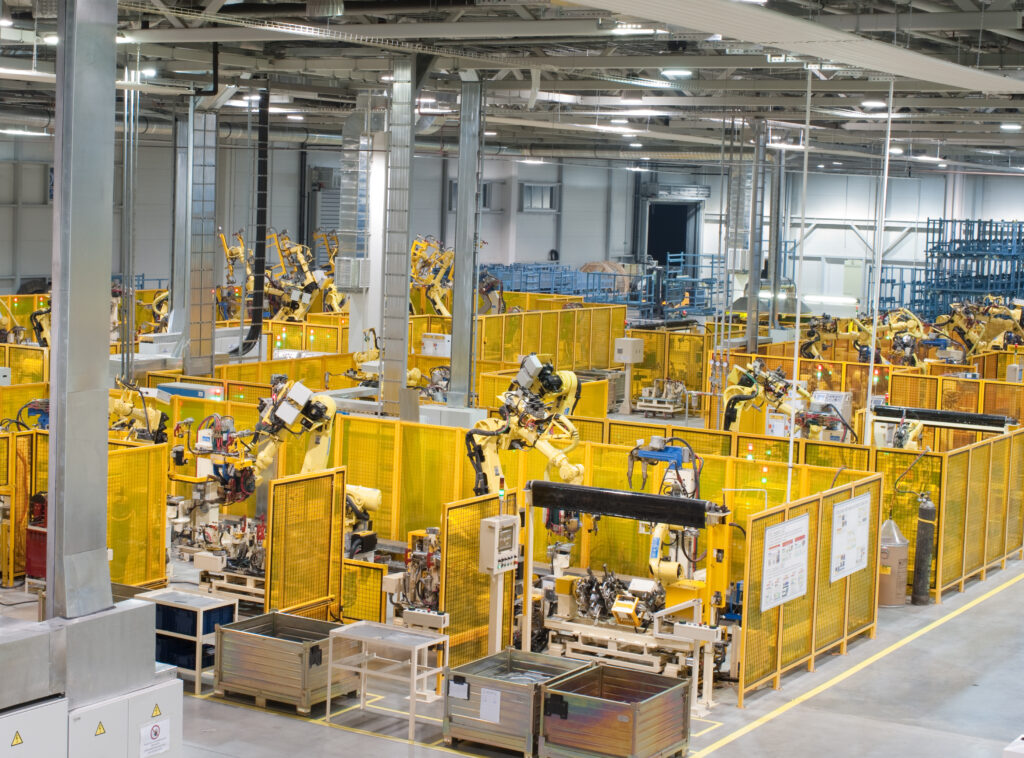
The machine manufacturer must ensure that the product meets all essential health and safety requirements set out in Machinery Directive 2006/42/EC. This includes carrying out a risk assessment related to the use of the machine and taking appropriate measures to eliminate or reduce hazards.
Conformity assessment procedures
Depending on the type of machine, the manufacturer must carry out the appropriate conformity assessment procedures, which may include:
- Internal production control: The manufacturer assesses independently whether the machine meets the requirements of the directive.
- EC type-examination: A procedure in which a notified body verifies the machine’s conformity with harmonized standards.
- Full quality assurance: A quality management system that must be approved by a notified body.
Declaration of conformity and CE marking
The manufacturer must draw up an EC declaration of conformity, confirming that the machine meets all requirements of the directive. The declaration must include:
- Manufacturer identification details.
- Description of the machine.
- List of applied harmonized standards.
- Signature of the person authorized to draw up the declaration.
CE marking must be affixed to the machine in a visible place, confirming its compliance with European Union requirements.
Technical documentation
The manufacturer must also prepare technical documentation, which must be made available at the request of the relevant market surveillance authorities. The documentation should include, among other things:
- General description of the machine.
- Design drawings and diagrams.
- List of standards and regulations applied to the machine.
- Description of the measures taken to ensure the machine complies with the essential requirements of the directive.
- Results of tests carried out and risk assessments.
Machinery Directive 2006/42/EC: Employer Responsibility
Employer obligations related to the use of machinery
Employers are responsible for ensuring that all machinery used in the workplace is safe and complies with the requirements of Machinery Directive 2006/42/EC. This includes several key obligations:
- Risk assessment: Employers must carry out regular risk assessments related to the use of machinery in order to identify potential hazards and implement appropriate preventive measures.
- Maintenance and servicing: Machinery must be regularly inspected, maintained, and serviced in accordance with the manufacturer’s instructions to ensure safe operation.
- Employee training: Employers must ensure that all employees using machinery are properly trained in operation, safety, and emergency procedures.
- Instructions and procedures: All instructions and procedures for the safe operation of machinery must be clearly defined and available to employees.
- Personal protective equipment (PPE): Employers must provide employees with appropriate PPE and ensure that it is used as recommended.
Employers are required to provide regular training on the safe operation of machinery and to ensure that appropriate personal protective equipment (PPE) is available.
Ensuring occupational health and safety
Occupational health and safety are key aspects of the employer’s responsibility. Employers must ensure that:
- All machinery is fitted with appropriate guards and safety devices to protect employees from injury.
- Collective protective measures, such as ventilation or dust extraction systems, are installed and functioning properly.
- Employees are aware of the hazards associated with using machinery and know how to respond in emergency situations.
- Regular occupational health and safety audits and inspections are carried out to ensure that all safety procedures are being followed.
Machinery Directive 2006/42/EC: Guidance for the Purchasing Department
Machine selection criteria
The purchasing department plays a key role in ensuring that purchased machinery complies with the Machinery Directive 2006/42/EC. When selecting machinery, the purchasing department should consider the following criteria:
- Compliance with standards: Check whether the machine bears the CE marking and has an EC Declaration of Conformity, confirming compliance with EU requirements.
- Technical documentation: Make sure the manufacturer provides complete technical documentation, including operating, maintenance and assembly instructions.
- Risk assessment: Select machines that have undergone a risk assessment and have been designed to minimise hazards.
- Service support: Ensure that the manufacturer offers after-sales support, including servicing and access to spare parts.
- References and reviews: Feedback from other users and verification of the manufacturer’s references can help assess the machine’s reliability and quality.
Verification of documentation and CE marking
The purchasing department should carefully verify the documentation provided by the manufacturer. The key elements to check are:
- EC Declaration of Conformity: Check whether the declaration contains all required information, such as the manufacturer’s details, machine description, applied harmonised standards and the signature of the authorised person.
- Operating instructions: Make sure the instructions are clear, detailed and available in the user’s language.
- CE marking: Verify that the CE marking is affixed to the machine in a visible location and is legible and durable.
Machinery Directive 2006/42/EC: Guidance for Occupational Health and Safety Services
Control and supervision of machine use
Occupational health and safety services have key responsibilities for controlling and supervising the safe use of machinery in the workplace. Here are some basic guidelines:
- Regular inspections: Carry out regular machine inspections to check their technical condition and compliance with occupational health and safety requirements.
- Safety audit: Organise regular safety audits covering risk assessment, documentation checks and compliance with safety procedures.
- Compliance monitoring: Ensure that all machines are used in accordance with the manufacturer’s instructions and legal requirements.
- Reporting and documentation: Keep accurate records of all inspections, audits and incidents related to machine use.
Training and instruction for employees
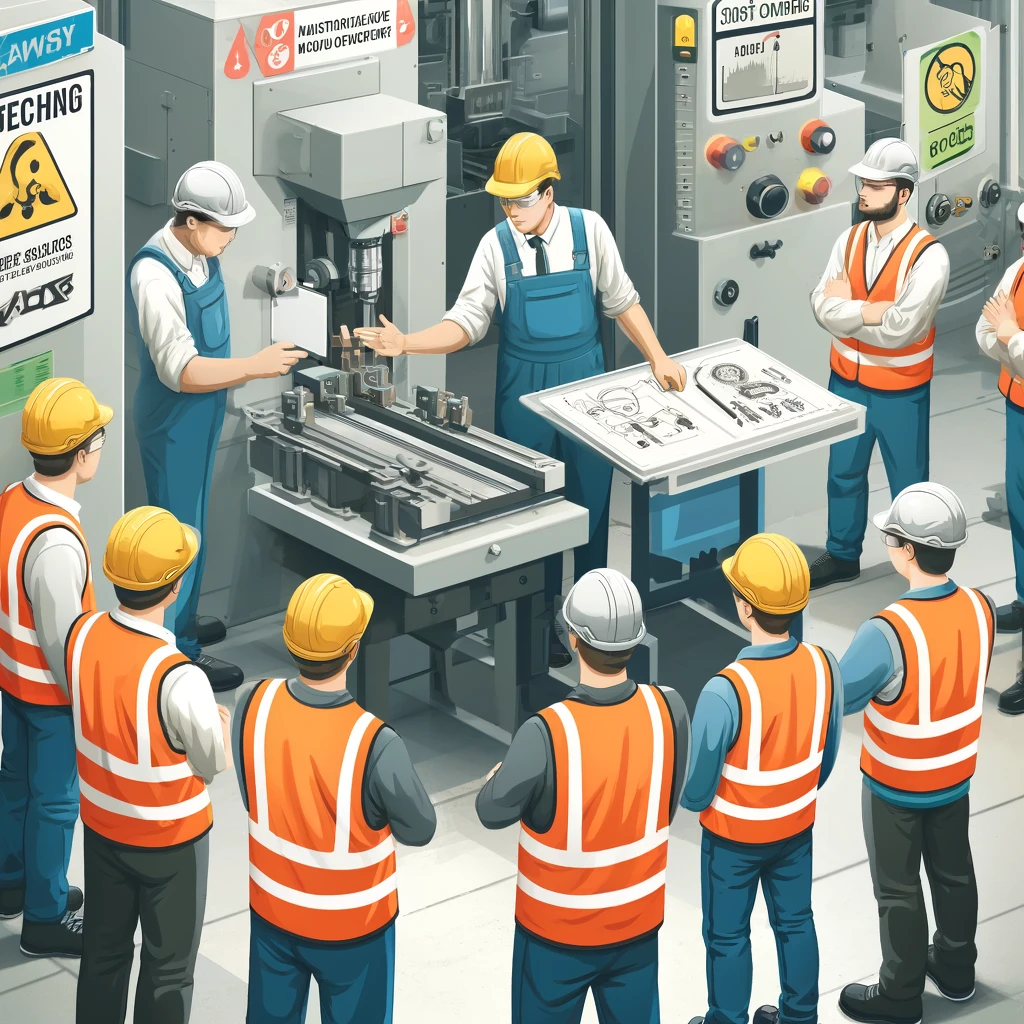
Education and training are key elements of an occupational health and safety strategy. Occupational health and safety services should provide:
- Initial training: Every employee who will use a machine should complete initial training covering safe operation, maintenance and emergency response.
- Refresher training: Regular refresher training helps maintain a high level of employee awareness of hazards and safety procedures.
- Operating instructions: Employees should have easy access to operating instructions and emergency procedures, which should be posted in visible locations near the machines.
Machinery Directive 2006/42/EC: Importing Machinery
Import procedures
Importing machinery into the European Union involves specific procedures that must be followed to ensure compliance with the Machinery Directive 2006/42/EC:
- Compliance check: The importer must ensure that the machine complies with the requirements of the Directive and bears the CE marking.
- Documentation verification: The importer should carefully check the technical documentation, including the EC Declaration of Conformity and the operating instructions.
- Safety inspection: Before placing the machine on the EU market, the importer must carry out a safety inspection to ensure that the machine meets all Directive requirements.
- Registration and notification: In some cases, it may be necessary to notify the relevant market surveillance authorities of the import.
Directive compliance requirements
Imported machinery must meet the same requirements as machinery manufactured within the EU. This means that importers must ensure:
- CE marking: The machine must bear the CE mark, confirming its compliance with EU requirements.
- Technical documentation: Complete technical documentation, including the EC Declaration of Conformity, must be available on request.
- Operating instructions: Operating and maintenance instructions must be provided in the language of the country where the machine will be used.
- Compliance assessment procedures: Depending on the type of machine, additional conformity assessment procedures may be required, such as EC type-examination or full quality assurance.
Importers of machinery into the EU must ensure that each machine has complete technical documentation and complies with the requirements of the Directive before it is placed on the market.
Machinery Directive 2006/42/EC: Declaration of Conformity
What should the Declaration of Conformity include?
The EC Declaration of Conformity is a document in which the manufacturer confirms that the machine meets all the requirements of Machinery Directive 2006/42/EC. It should include the following:
- Manufacturer identification details: The manufacturer’s name, address, and contact details.
- Description of the machine: A brief but detailed description of the machine, including its trade name, model, and serial number.
- List of harmonised standards applied: A list of the standards used to ensure the machine’s compliance with the requirements of the Directive.
- Signature of the authorised person: The declaration must be signed by a person authorised to represent the manufacturer, together with the date and place of issue.
Importance of the Declaration of Conformity
The Declaration of Conformity is a key document in the process of placing a machine on the EU market. Its importance includes:
- Confirmation of compliance: The declaration is formal confirmation that the machine meets all the requirements of Machinery Directive 2006/42/EC.
- Basis for CE marking: Only on the basis of the Declaration of Conformity may the manufacturer affix the CE mark to the machine.
- Compliance documentation: The declaration forms part of the technical documentation that the manufacturer must retain and make available at the request of market surveillance authorities.
- User confidence: Having a Declaration of Conformity increases user confidence in the machine by confirming its safety and regulatory compliance.
Machinery Directive 2006/42/EC: Machine Documentation
Components of technical documentation
Technical documentation is a key element in demonstrating a machine’s compliance with Machinery Directive 2006/42/EC. It should include:
- General description of the machine: A detailed description of the machine, its intended use, and its main functions.
- Design drawings and diagrams: Comprehensive drawings and diagrams showing the machine’s design and operation.
- List of standards and regulations: A list of all harmonised standards and regulations applied in the design and construction of the machine.
- Description of safety measures: A description of the safety measures implemented to protect users from hazards.
- Test results and risk analyses: Documentation of the results of tests carried out and the risk assessment according to EN ISO 12100 related to use of the machine.
- Operating and maintenance instructions: Detailed instructions for the operation, maintenance, and repair of the machine.
Importance and retention of documentation
Technical documentation serves several key functions:
- Basis for conformity assessment: It serves as the basis for assessing the machine’s compliance with the requirements of Machinery Directive 2006/42/EC.
- Verification by surveillance authorities: Market surveillance authorities may request access to the documentation to verify the machine’s compliance.
- Technical support: The documentation is an invaluable source of information for service technicians and machine users, helping them resolve technical issues.
- Retention: The manufacturer is required to retain the technical documentation for at least 10 years from the date the machine is placed on the market. The documentation may be kept in paper or electronic form, provided it is readily available on request.
Machinery Directive 2006/42/EC: responsibilities of the parties
Machinery Directive 2006/42/EC imposes a range of obligations on manufacturers, employers, importers, and other stakeholders to ensure the safety of machinery placed on the EU market. Key responsibilities include:
- Manufacturer: Ensuring that machinery complies with safety requirements, carrying out conformity assessment procedures, preparing the declaration of conformity and technical documentation.
- Employer: Ensuring the safe use of machinery, regular maintenance, and employee training.
- Purchasing Department: Verifying machinery compliance with the directive before purchase, and checking the documentation and CE marking.
- Occupational Health and Safety Services: Supervising workplace safety, and conducting regular inspections and training.
| Party | Main responsibilities |
|---|---|
| Manufacturer | Ensuring machinery complies with safety requirements Preparing the EC declaration of conformity Preparing and retaining technical documentation Affixing the CE marking to the machine |
| Employer | Ensuring the safe use of machinery Regular maintenance and inspection of machinery Training employees in machine operation Providing appropriate personal protective equipment (PPE) |
| Purchasing Department | Verifying machinery compliance with the directive before purchase Checking the technical documentation and CE marking |
| Occupational Health and Safety Services | Monitoring and supervising the use of machinery Regular safety inspections and audits Organizing occupational health and safety training for employees |
| Importer | Checking that imported machinery complies with the directive Verifying and retaining technical documentation Ensuring CE marking before placing machinery on the market |
Machinery Directive 2006/42/EC: The importance of the Machinery Directive for occupational safety
The Machinery Directive 2006/42/EC plays a key role in improving occupational safety across the European Union. Its provisions are intended to:
- Minimize risk: Thanks to requirements for the design and construction of machinery, the risks associated with its use are reduced to a minimum. Risk assessment in accordance with EN ISO 12100 can be carried out under the standard EN ISO 12100, which belongs to type A harmonized standards.
- Ensure a high level of protection: The directive’s provisions ensure a high level of protection for the health and safety of machinery users.
- Harmonize regulations: The directive harmonizes machinery regulations across the EU, making trade and market placement easier.
- Increase user confidence: Machinery that complies with the directive and bears the CE marking is regarded as safe and reliable, which increases user confidence.
External links
Full text of Machinery Directive 2006/42/EC: https://eur-lex.europa.eu/legal-content/PL/TXT/PDF/?uri=CELEX:32006L0042
Machinery Directive 2006/42/EC: Manufacturer’s obligations
The manufacturer must ensure that the machine meets the essential health and safety requirements. This includes assessing the risks associated with use of the machine and implementing measures to eliminate or minimize hazards.
Depending on the type of machine, the manufacturer applies the appropriate procedure, such as internal production control, EC type-examination, or full quality assurance. A notified body is involved in some procedures.
The EC Declaration of Conformity should include the manufacturer’s identification details, a description of the machine, a list of the harmonised standards applied, and the signature of an authorised person. It confirms compliance with the requirements of the Directive.
The CE marking is affixed to the machine in a visible location once its conformity with the requirements has been confirmed. The CE marking confirms that the machine complies with European Union regulations.
The technical documentation must be made available at the request of market surveillance authorities. It should include, among other things, a general description of the machine, design drawings and diagrams, and a list of the standards and regulations applied to the machine.