
Key takeaways:
- A machine, an incorporation module and a control cabinet may operate on the same line but be subject to different requirements. Learn how to define the supply scope, select the legislation and obtain the correct documents.
What distinguishes machinery from equipment?
“Equipment” is a useful term in a technical description, but it does not identify the legislation under which a product should be assessed. A microscope, a variable-speed drive and a packaging machine can all be described with the same word, yet each supply must be considered separately. The Machinery Directive does not divide products into complex machines and simple equipment.
In the basic case, Article 2(a) of Directive 2006/42/EC refers to linked parts, at least one of which moves, joined together for a specific application. The assembly is fitted with, or intended to be fitted with, a drive system other than directly applied human or animal effort. The provision also covers other cases, including an assembly intended for lifting loads whose only power source is directly applied human effort. A manual hoist is therefore a useful counterexample to the claim that “machinery must have a motor”.
Also check what remains to be done at the customer’s site. An assembly missing only the components needed to connect it on site or to sources of energy and motion may already be machinery. The position is different for an assembly intended solely for incorporation into other machinery and unable in itself to perform a specific application. In that case, check the definition of partly completed machinery in Article 2(g). This describes the assembly’s role in the project; it is not another term for unfinished assembly work.
Three supplies for the same line
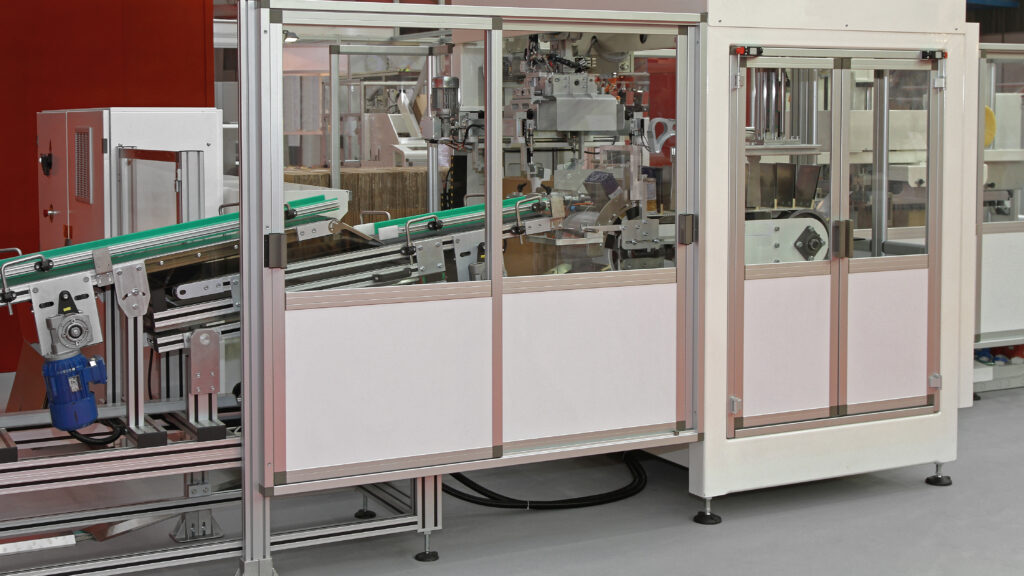
Consider a factory ordering a carton-packaging line. The quotations cover a complete carton-sealing machine, a module and a control cabinet. Each supplier may describe its product as “equipment” in the order. For the team accepting the line, three different descriptions are more useful.
| What is delivered | What to check | Consequence |
|---|---|---|
| Complete carton-sealing machine | The driven assembly performs its task after the intended connection and installation. | The machine is assessed in the configuration supplied, including its intended use. |
| Module for incorporation | The assembly is intended solely for incorporation into a larger machine and cannot itself perform a specific application. | If it meets the definition of partly completed machinery, the supplier prepares the incorporation documents. The manufacturer of the completed machine assesses the final machine. |
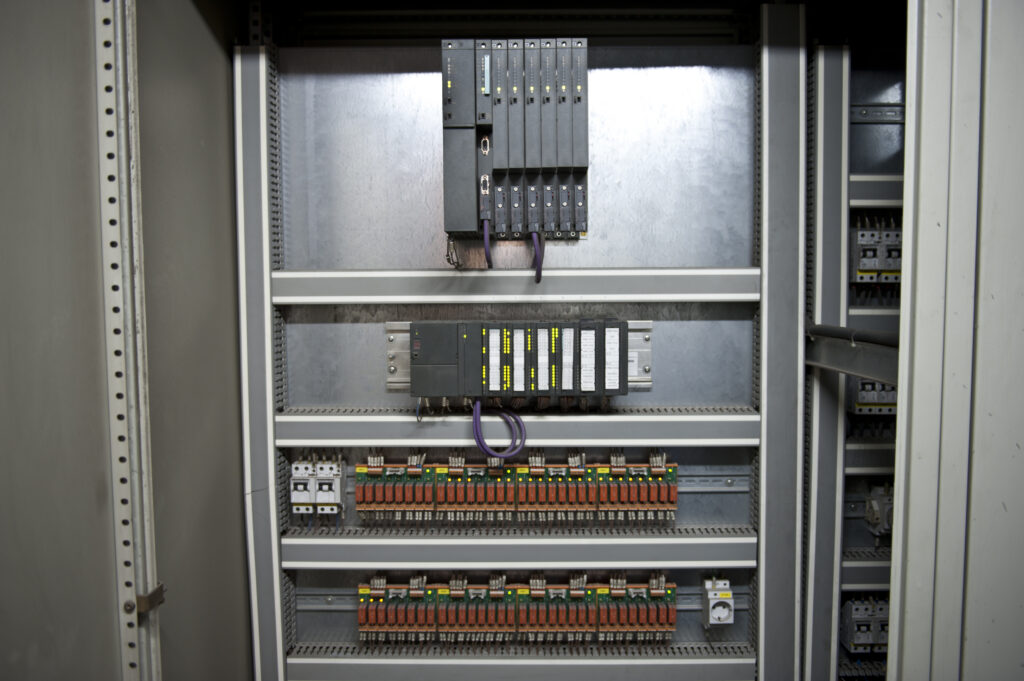
| Separate control cabinet | What product is being supplied, and which electrical and EMC requirements apply to its intended use? | The cabinet documents cover its own supply scope. The integrator must still verify operation of the control system in the machine as a whole. |
For a module, ask the supplier to specify exactly what is missing before it can perform its function. A power connection is one matter; mechanical parts or controls that give the assembly its intended purpose are another. For the same reason, the purchase order should define the configuration for acceptance and the integrator’s scope of work.
Which documents follow from the classification?
For a complete machine, Directive 2006/42/EC requires the manufacturer, before placing it on the market or putting it into service, to ensure, among other things, that the applicable essential requirements are met, the technical file is available, instructions are supplied, the appropriate conformity assessment is completed, an EC declaration of conformity is drawn up and CE marking is affixed. As part of the risk assessment, the manufacturer identifies hazards and takes the results into account in the design and selection of protective measures. Describing a safeguard in the instructions does not solve a problem that should be eliminated by design.
For partly completed machinery, the documentation includes assembly instructions and a declaration of incorporation. The supplier’s information is needed to incorporate the assembly correctly into the machine and establish which issues the supplier has addressed. A declaration of incorporation does not confirm conformity of the final configuration. During acceptance, compare the document with what was physically delivered and how you intend to use it.
When must several products be assessed together?
Robot, conveyor and common control system
A robot transfers a part from a conveyor to an assembly fixture. The control system coordinates both movements, and the operator enters the placement area to clear a jammed part. Even if the individual supplies have their own documents, the hazards arising from their interaction must be assessed. Who designed the access arrangement? What stops when the guard is opened? What can start after readiness is restored?
The Directive also treats assemblies of machinery or partly completed machinery as machinery when they are arranged and controlled to achieve a common end as an integral whole. Merely placing machines next to one another is not enough. Classification depends on how the units are linked, how they interact and what the risk assessment covers. Three CE plates take up less space than a description of the interfaces. They do not replace it.
Tablet press and laboratory equipment
Compare a tablet press with a microscope used by quality control. Both products operate at the same site, but they serve different purposes and present different hazards. First establish what the product does and how it will be used. Only then assign the applicable legislation. The customer’s industry does not determine the classification.
When should you check LVD, EMC or ATEX?
- LVD 2014/35/EU: check the Directive’s scope for electrical equipment. Its voltage limits are 50–1,000 V AC and 75–1,500 V DC, subject to the exclusions specified in the act. For electrically powered machinery, the safety objectives relating to electrical hazards apply. For those hazards, conformity assessment and placing the machinery on the market are governed by the Machinery Directive, in accordance with section 1.5.1 of Annex I.
- EMC Directive 2014/30/EU: determine whether the product falls within the Directive’s scope and which requirements apply to its electromagnetic emissions and immunity. Consider the actual configuration in which it will operate.
- ATEX 2014/34/EU: if the product is intended for use in a potentially explosive atmosphere, check the scope of the Directive for equipment and protective systems. Intended use is central to the assessment. Mentioning ATEX in a catalogue description does not establish the conditions in which the product is intended to operate.
In practice, one product may be subject to several acts. When adding requirements to a specification, a short list helps: which act applies, which part of the assessed product the requirement concerns, and how compliance will be demonstrated. A list of abbreviations on the first page of the documentation settles very little.
How should you select the procedure and prepare for the 2027 legislative change?
Start by determining the product category. Under Directive 2006/42/EC, the conformity assessment procedure follows from Article 12. For machinery not listed in Annex IV, that Article provides for internal checks on the manufacture of machinery. For machinery listed in Annex IV, the available procedures depend in part on whether the harmonised standards applied cover all relevant requirements. If the conditions of Article 12(3) are met, internal checks are also one of the options. Listing in Annex IV therefore does not automatically make EC type-examination mandatory.
As at 28 November 2026, Directive 2006/42/EC remains the basis for machinery assessment. Regulation (EU) 2023/1230 generally applies from 20 January 2027. If supply is due close to that date, check when the product is placed on the market or put into service, as well as the transitional provisions. The date of the order or acceptance at the supplier’s premises does not by itself determine which act applies.
What should be established before acceptance?
- Define the subject of the supply. Record the functions the assembly must perform, what will be delivered and what work must be completed on site.
- Check the product classification. Consider its intended use, operating principle and any applicable exclusions. For an integration project, also check whether the machines form a single whole.
- Match the documents to the supply. Establish who will prepare the documentation for the component parts, who will assess the complete system and who will sign the declaration for the completed machine.
The answer to “machine or equipment?” should be reflected in what you order, which documents you accept and which configuration you take responsibility for. The team can then verify product conformity even if the purchase order still uses the single word “equipment”.
Sources
- Directive 2006/42/EC — Articles 1, 2, 5 and 12–13, and Annex I, section 1.5.1
- Regulation (EU) 2023/1230 — Articles 52 and 54, including application dates
- Directive 2014/35/EU (LVD) — scope and exclusions
- Directive 2014/30/EU (EMC) — scope and requirements
- Directive 2014/34/EU (ATEX) — Article 1 and scope
Frequently asked questions
Yes. Neither the number of functions nor the level of complexity determines classification. Check the construction, type of motion and drive, intended use and scope of the applicable legislation.
Not by itself. Check whether the intended connection is all that is needed for operation, or whether the assembly can perform its task only after being incorporated into another machine.
Assembly instructions and a declaration of incorporation accompany the supply. The manufacturer also prepares the relevant technical documentation. The declaration of incorporation applies to the assembly supplied.
The cabinet documents apply to the product identified by its manufacturer. The machine assessment must also cover the cabinet’s integration into the system and operation of the machine as a whole.