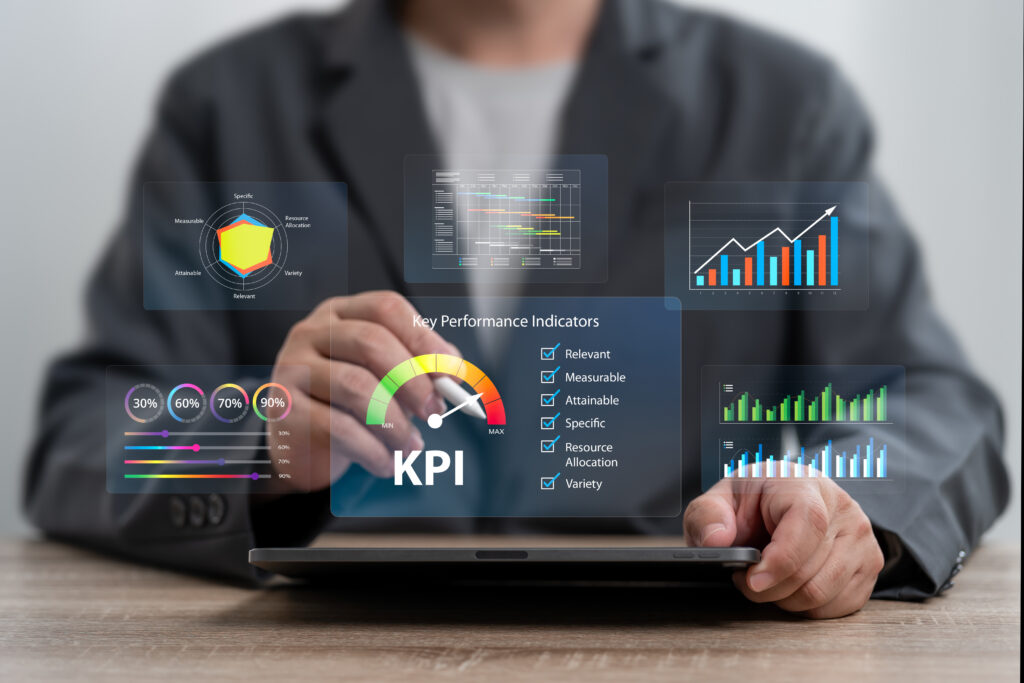

Key takeaways:
The article discusses the use of KPIs in production automation and their application in SCADA, ERP, and finite element analysis systems to assess process efficiency, quality, and reliability.
- KPIs (Key Performance Indicators) are key metrics used to monitor progress and process efficiency in production automation.
- In industrial automation, common KPIs include OEE, MTBF, MTTR, and downtime, which support the assessment of machine performance and reliability.
- KPIs help identify areas for improvement, optimize processes, increase efficiency, and reduce production costs.
- In SCADA systems, KPIs support real-time monitoring, such as alarm response times, product quality, and operational performance.
- In FEA and ERP, KPIs include cycle time, production compliance, and resource utilization efficiency, improving planning and cost control.
Introduction to KPI – Key Performance Indicator
KPI – Key Performance Indicator refers to key performance indicators that are essential in business management, especially in the context of industrial automation and production automation. KPIs make it possible to monitor the progress and performance of various processes, which is critical to achieving business and operational goals. In this article, we look at how KPI – Key Performance Indicator can be used effectively across different areas of industry, from SCADA systems and manufacturing execution systems to ERP, as well as risk, project, and business process management.
KPI – Key Performance Indicator in the Context of Industrial Automation
Production process automation is one of the main areas in which KPI – Key Performance Indicator plays a crucial role. KPIs make it possible to monitor and optimize machine performance, production processes, and entire production lines. Here are a few examples of KPIs used in industrial automation:
- OEE (Overall Equipment Effectiveness) – an indicator of overall equipment effectiveness that measures availability, performance, and production quality. It is one of the most important KPIs because it provides a comprehensive assessment of machine and equipment performance.
- MTBF (Mean Time Between Failures) – the average time between failures. This indicator is essential for assessing machine and equipment reliability.
- MTTR (Mean Time to Repair) – the average repair time. This KPI helps assess the effectiveness of maintenance and repair processes.
- Downtime – machine downtime. Monitoring downtime helps identify problems and eliminate them quickly, leading to higher production efficiency.
The Role of KPIs in Production Process Automation:
- KPIs make it possible to identify areas that need improvement, which is essential for the continuous improvement of production processes.
- They help optimize production processes, making it possible to increase output and reduce production costs.
- They support resource management and production planning, enabling better use of available resources and shorter order lead times.
| KPI | Description | Purpose |
|---|---|---|
| OEE (Overall Equipment Effectiveness) | An indicator of overall equipment effectiveness that measures availability, performance, and production quality. | Optimize machine performance. |
| MTBF (Mean Time Between Failures) | Average time between failures. | Assess machine reliability. |
| MTTR (Mean Time to Repair) | Average repair time. | Assess maintenance effectiveness. |
| Downtime | Machine downtime. | Minimize production stoppages. |
| Operational efficiency | The percentage of planned production achieved within a specified period. | Assess operational effectiveness. |
| Defect rate | The percentage of defective products relative to total output. | Reduce the number of defects. |
| Changeover time | The time needed to change machine settings between different production runs. | Optimize production time. |
| Energy consumption indicator | The amount of energy consumed per unit of production. | Reduce energy costs. |
| Unit production cost | Total production cost divided by the number of units produced. | Optimize production costs. |
| Order fulfillment time | The time from placing an order to delivering the product to the customer. | Improve delivery efficiency. |
SCADA Systems and KPI – Key Performance Indicator: Real-Time Monitoring
SCADA (Supervisory Control and Data Acquisition) systems are essential for monitoring and controlling industrial processes in real time. KPI – Key Performance Indicator in SCADA systems enables operators to monitor the performance, safety, and quality of production processes. Examples of KPIs used in SCADA systems include:
- Alarm response time – how quickly the team responds to system alerts. A fast response to alarms is essential for minimizing downtime and ensuring production continuity.
- Product quality – measuring whether products meet specified standards. Monitoring product quality makes it possible to detect and eliminate defects quickly.
- Operational efficiency – assessing the effectiveness of production processes in real time. This KPI makes it possible to monitor and optimize production processes on an ongoing basis.
The role of SCADA systems in industrial automation:
- SCADA enables remote process monitoring and control, allowing rapid response to any deviations from normal operating conditions.
- It enables real-time data collection and analysis, which is essential for making informed operational decisions.
- It supports process optimization and decision-making, leading to higher production efficiency and lower operating costs.
Manufacturing Execution Systems and ERP vs KPI – Key Performance Indicator
Manufacturing execution systems and ERP (Enterprise Resource Planning) systems are an integral part of modern industrial production. KPI – Key Performance Indicator in these systems enables comprehensive management and optimization of production processes. Key KPIs in manufacturing execution systems and ERP include:
- Production cycle time – the time required to manufacture a product from start to finish. Monitoring this KPI helps identify bottlenecks and optimize production processes.
- Production conformity – the percentage of products that meet specification. This indicator is essential for maintaining high product quality and can support activities such as conformity assessment.
- Resource utilization efficiency – an assessment of how effectively machines and employees are used. This KPI supports better resource planning and management.
Benefits of implementing KPI in manufacturing execution systems and ERP:
- Improved production planning and scheduling, enabling better use of available resources and shorter order fulfillment times.
- Better control of production costs, allowing the budget to be managed more effectively.
- Greater process transparency and efficiency, leading to better operational and business results.
KPI – Key Performance Indicator in Risk Management
In risk management, KPI – Key Performance Indicator are extremely important for identifying, assessing, and monitoring risk in production processes. In a project context, risk analysis and KPIs such as the following are especially valuable:
- Number of safety incidents – the number of safety-related events in a given period. Monitoring this KPI helps identify and eliminate safety hazards.
- Risk response time – the time needed to take action in response to an identified risk. A rapid response to risk is critical to minimizing its impact on operations.
- Cost of risk management – the total cost associated with risk management activities.
Examples of KPI in FMEA (Failure Mode and Effects Analysis), DFMEA (Design FMEA), and PFMEA (Process FMEA) analyses:
- Number of potential failure modes – identification and monitoring of the number of potential failure modes in engineering projects.
- Failure-related risk – assessment of the risk associated with different failure modes and their potential impact on production processes.
- Effectiveness of corrective actions – monitoring how effective the actions taken are in eliminating or minimizing the risk of failure.
KPI – Key Performance Indicator in the Design Office
In the design office, KPIs are essential for monitoring the efficiency of machine and equipment design. KPI – Key Performance Indicator used in design offices include:
- Design time – the time required to complete a full design. Monitoring this KPI helps optimize design processes and shorten project delivery times.
- Design cost – the total cost associated with the design process. This KPI helps control the budget and minimize design costs.
- Design quality – the number of errors and required revisions in the design. Monitoring design quality helps identify areas for improvement and increase the efficiency of design processes.
KPI – Key Performance Indicator in Project Management
In project management, KPIs are essential for monitoring project progress and efficiency. Key KPI – Key Performance Indicator in project management include:
- Project schedule – the percentage of tasks completed on time. Tracking this KPI helps identify delays and take corrective action.
- Project budget – the percentage of the budget used to date. This KPI helps control project costs and minimize budget overruns, including expenses such as hidden project costs.
- Customer satisfaction – the customer’s level of satisfaction with project delivery. Monitoring customer satisfaction helps identify areas for improvement and improve the quality of project execution.
Additional indicators in project management:
- Earned Value (EV) – an earned value metric that measures the value of completed work against what was planned. Monitoring EV helps assess project progress and identify potential issues.
- Number of open items in the LOP (List of Open Points) – the number of unresolved open items. This KPI helps track outstanding tasks and identify areas that require attention.
- Rate of closing open items – the time needed to close open items. Monitoring this KPI helps assess the effectiveness of corrective actions and supports fast decision-making.
Use of KPIs in production automation and systems integration:
- They help monitor the progress of production automation and systems integration.
- They make it easier to assess the efficiency of automation and integration processes.
- They support data-driven decision-making, leading to better operational and business results.
KPI – Key Performance Indicator in Business Process Management
KPIs also play a key role in business process management, helping monitor and optimize various aspects of a company’s operations. Below are the key KPIs used across different business processes:
KPIs in sales:
- Number of inquiries – the number of inquiries received from potential customers. Monitoring this KPI helps assess the effectiveness of marketing activities.
- Conversion rate – the percentage of inquiries converted into sales. A high conversion rate indicates effective sales activities.
- Average order value – the average value of a single order. Monitoring this KPI helps optimize pricing and marketing strategy.
KPIs in quality processes:
- Number of complaints – the number of complaints submitted by customers. Monitoring this KPI helps identify quality issues and take corrective action.
- Complaint response time – the time needed to respond to a customer complaint. A fast response to a complaint improves customer satisfaction.
- Product compliance level – the percentage of products that meet specified quality standards. Monitoring this KPI helps maintain high production quality and supports requirements related to CE marking.
KPIs in accounting processes:
- Invoice processing time – the average time needed to process invoices. Reducing this time increases the efficiency of accounting processes.
- Accounting accuracy – the percentage of transactions posted accurately. High accounting accuracy minimizes the risk of financial errors.
- Invoice processing cost – the average cost of processing a single invoice. Monitoring this KPI helps optimize operating costs.
KPIs in financial processes:
- Cash flow – net cash flow. Monitoring this KPI helps assess the company’s financial liquidity.
- Days Sales Outstanding (DSO) – the average number of days needed to receive payment for products sold. Reducing DSO improves the company’s financial liquidity.
- Operating profitability – the ratio of operating profit to revenue. High operating profitability indicates strong operational efficiency.
The Future of KPIs in Industrial Automation
Trends and innovations in KPIs:
- New technologies supporting KPI monitoring, such as Big Data, IoT, and artificial intelligence.
- The development of analytics systems and KPI data visualization tools.
How technological development affects KPIs:
- The use of Big Data and IoT in KPI monitoring makes it possible to collect and analyze large volumes of data in real time.
- The impact of automation and robotization on KPIs, which are becoming more precise and more comprehensive.
Industry 4.0 and the role of KPIs in the future:
- The importance of KPIs in the context of Industry 4.0, where automation and the digitalization of production processes play a key role.
- How KPIs will shape the future of automation and manufacturing, enabling better management and optimization of production processes.
KPI – Key Performance Indicator is an essential tool for managing production processes, production process automation, SCADA systems, manufacturing execution systems and ERP, as well as risk management, project management, and business processes. With the right KPIs in place, companies can monitor and optimize their operations, leading to greater efficiency and better business results. In the following sections of the article, we discuss in detail the various aspects of KPI use in industry, presenting examples, benefits, and best practices.
KPI – Key Performance Indicator in Production Automation
KPI (Key Performance Indicators) are key performance metrics used to monitor progress and the effectiveness of production processes. They help assess the achievement of operational and business objectives and identify areas for improvement.
The most commonly used metrics are OEE, MTBF, MTTR, and Downtime. They enable the assessment of availability, performance, quality, reliability, and downtime.
In SCADA systems, KPIs make it possible to monitor processes in real time, such as alarm response times, product quality, and operational efficiency. This enables faster responses to deviations and helps reduce downtime.
In FEA and ERP, production cycle time, production conformity, and resource utilization efficiency are often monitored. These indicators support planning, scheduling, and production cost control.
Example KPIs include the number of safety incidents and response time to risk. Monitoring them helps identify hazards and reduce the impact of risks on the production process.