
Key takeaways:
The article points out that misidentifying the boundary between operation, occupational health and safety adaptation, and modernization shifts costs to the stage of failure, downtime, or a dispute with the insurer. It is crucial to define responsibilities and organize safety documentation early, as part of the technical documentation.
- Compliance of machinery with minimum occupational health and safety requirements affects production continuity, liability after a loss event, and risk costs.
- The issue concerns not only guards, but also demonstrating the status of safeguards, the rules for use, and a decision trail after changes.
- Upgrades to controls, drives, or operating logic may change a machine’s status and require a broader conformity assessment.
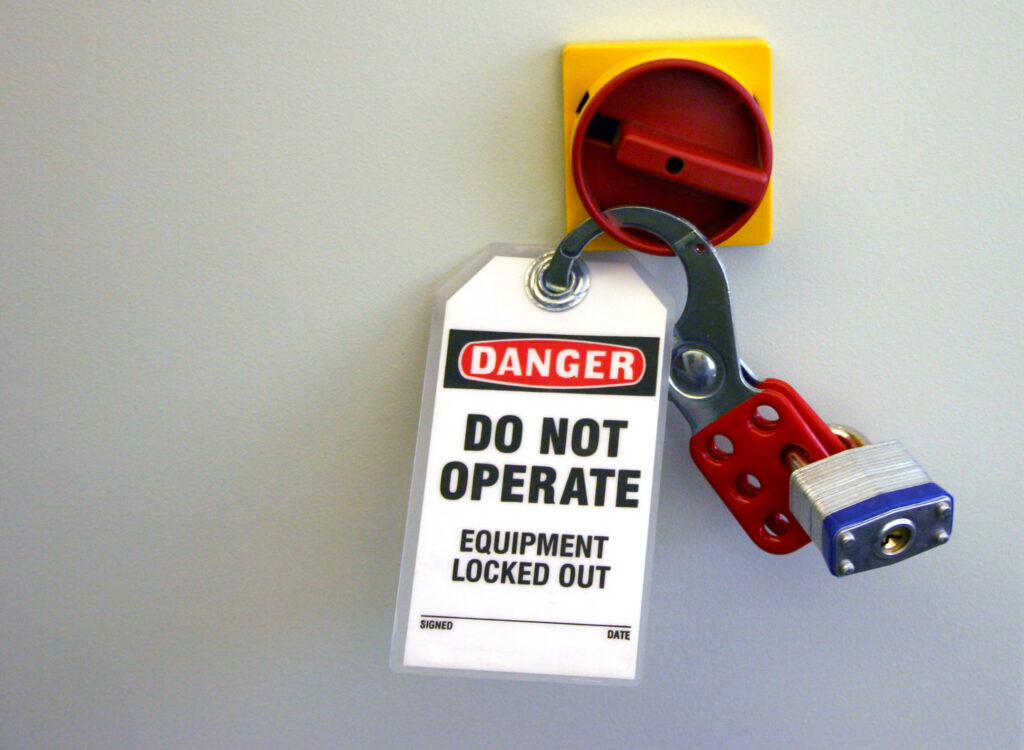
- A common cause of both property damage and risks to people includes damaged guards, bypassed interlocks, and failure to isolate energy.
- Minimum occupational health and safety requirements apply to the use of machinery and do not replace an assessment of the effects of modernization or a substantial modification.
The relationship between a plant’s property insurance and machine compliance with minimum occupational health and safety requirements is no longer an issue addressed only “after an inspection” or left solely to the safety team. Today, it is a real investment and operational decision factor because it directly affects production continuity, the scope of liability after a loss, and cost predictability. If the machine fleet includes equipment modernized in stages, moved between lines, or integrated with new automation, the issue is not simply whether a machine “has guards.” The real question is whether the plant can demonstrate that the workstation and the way the machine is used meet the minimum occupational health and safety requirements, and that the technical condition of the protective measures is maintained and supervised. In practice, this is exactly where tension most often arises: insurance is meant to protect assets, but after an incident the key issue becomes whether the risk was managed in a way that is technically and organizationally defensible.
This is something that needs to be decided now, not at policy renewal, because the wrong sequence of actions increases project cost or blocks the project at the worst possible moment. Very often, a plant begins modernization with what is most urgent for production: controls, output, data integration, or adding a new module. But if, in parallel, no one checks how the machine’s status is changing, which protective measures need to be adapted, and whether there are gaps against the minimum occupational health and safety requirements, the team shifts the cost from the planning stage to the stage of failure, downtime, or a dispute with the insurer. At that point, the issue is no longer just the premium, but the total cost of risk: additional acceptance checks, urgent rework, extended commissioning, and difficulty assigning responsibility between the machine owner, the integrator, and the software supplier. This is also where the discussion broadens to include machine risk and compliance costs, as well as the organization of cooperation between maintenance, automation, and external contractors.
A practical criterion for assessing the situation is simple, although it requires discipline: for a given machine or line, the plant must determine whether it can demonstrate three things at the same time, without reconstructing them “after the fact” — the current state of the protective measures, the rules for their use, and a decision trail for technical changes. If there is no clear answer to those three questions, the risk is already a project risk, not just an operational one. A good example is the addition of remote diagnostics, a new drive, or changes to the sequence logic. From a production perspective, this may look like a minor modification, but from a safety and liability perspective it may change access to hazardous zones and the conditions for stopping, reset, or restart. If no one has been assigned ownership of that decision and no one has checked the impact on the protective measures, the plant creates its own gap — one that will resurface during a loss audit, an accident investigation, or a dispute over who was responsible for identifying the non-compliance.
In practice, the most important cases are those in which a property loss event and a hazard to people share the same technical cause. Damage to a guard, bypassing an interlock, ineffective energy isolation, or the possibility of unexpected start-up are not separate worlds of “safety” and “insurance”; they are often the same risk mechanism viewed from two sides. That is why decisions on modernization, acceptance, and maintenance must be structured so that safety documentation is not an add-on to the technical documentation, but part of it. In many plants, this is exactly where the need begins to organize cooperation between the integrator, the software house, and the maintenance department: without a clear division of responsibilities, it is easy to miss a change that looks harmless on a diagram but in reality affects safety functions or the method of energy isolation. This area is also often the first sign that a separate analysis of protection against unexpected start-up is needed, because the issue is no longer just formal compliance, but a real loss scenario.
From a regulatory perspective, the terminology must remain clear. Minimum occupational health and safety requirements concern the employer’s use of machines and the assessment of whether the equipment used in the plant provides the required level of safety under the given working conditions. They do not replace an assessment of the effects of modernization, nor do they in themselves determine issues related to placing a machine on the market or putting it into service after a substantial modification. For property insurance, this is fundamental: the plant should know whether it is dealing with the operating condition of an existing machine or already with a change that requires a broader compliance approach. If that boundary is not identified at the start of the project, the costs always appear later — except that by then they are less controllable and responsibility is harder to assign.
Where cost or risk most often increases
The highest costs do not arise where a machine is simply old or lacks complete guarding, but where the plant misclassifies the scope of the problem. In practice, this means conflating three separate issues: day-to-day adaptation of a workstation to meet minimum occupational health and safety requirements, a modernization that affects how the machine operates, and the insurer’s expectations regarding the limitation of property damage. If these areas are bundled into a single project under the banner of “bringing the machine into compliance,” the team usually begins with purchasing and implementation work, only to discover later that the change affects the control system, the stopping method, or the operating logic. At that point, not only do modification costs increase, but so does the risk of a dispute over whether the work was a routine operational adaptation or already a change requiring a broader assessment. For the plant, this distinction also matters from the perspective of property insurance: after a loss, what counts is not the project’s stated intent, but the actual technical condition, the documented scope of the intervention, and whether known hazards were identified before start-up.
At the project decision stage, costs most often increase because of seemingly economical simplifications. The typical pattern is this: the team wants to limit downtime, so it replaces guarding components, adds interlocks, relocates the control panel, or changes the stopping sequence without a full review of dependencies. Such a decision is only rational if it can be shown that it does not alter the safety function, create new operating modes, or worsen the conditions for safe operation, cleaning, and fault clearing. The practical assessment criterion is simple: if the planned change affects access to hazardous zones, the method of energy isolation, restart logic, or machine behavior in an emergency, it should not be treated solely as a “health and safety housekeeping” issue. At that point, the project moves into an area where usability safety, responsibility for the modification, and the impact on insurance conditions must be assessed in parallel. One set of indicators helps bring order to this: the number of scope changes after start-up, downtime caused by corrections, the number of deviations between the original assumptions and the final implementation, and the completeness of the acceptance documentation.
A good example is retrofitting a machine with new perimeter guarding and interlocked doors, formally carried out as an improvement to workplace safety. If, as part of the same intervention, the reset method, service access, and start-up sequence after opening the guard were also changed, the project stops being purely a maintenance task. There is then a risk that the operator will bypass the safeguards, the service team will lose a clear energy isolation procedure, and after an incident it will be difficult to show who was responsible for assessing the effects of the modification as a whole. This is exactly where the issue naturally connects with the preparation of machine operating manuals: if the actual safe method of operation, changeover, cleaning, or dealing with a jam has changed, a technical note alone is not enough. This is also the point at which the issue borders on the mistakes made in industrial machine construction, because the problem is no longer just a missing guard, but inconsistency between mechanics, control, and human behavior. Where operator error is foreseeable, it is also worth considering solutions that enforce the correct sequence of actions, rather than relying solely on another layer of formal prohibitions.
From the perspective of minimum occupational health and safety requirements, the key point is that they relate to the employer’s safe use of the machine under specific working conditions. They do not automatically determine whether the scope of the intervention was small enough to avoid further-reaching obligations on the part of the entity making the changes. That is why costs and responsibility increase especially when a plant tries to “achieve compliance” through technical equipment alone, without defining the project boundary and without putting the documentation in order. In dealings with the insurer, what matters in practice is not the compliance label itself, but the ability to show that the machine was deliberately assessed after the change: which hazards were eliminated, which remained, which organizational measures are necessary, and whether the instructions, procedures, and technical acceptance reflect the actual condition. If that structure is missing, the consequences return at the least convenient moment — as additional downtime, the cost of rebuilding the machine again, or a dispute over the scope of liability after a loss.
How to approach the issue in practice
In practice, this issue should be handled as a project decision, not as a side duty of the health and safety or administrative department. The relationship between the plant’s property insurance and machine compliance with minimum occupational health and safety requirements becomes visible when, after a breakdown, fire, or prolonged downtime, it is necessary to demonstrate the technical condition in which the machine was being used and whether the employer had control over the risks associated with its operation. For a manager, this means a simple shift in perspective: not just asking whether the line can be started, but whether the way it is used, the scope of the changes, and the completeness of the documentation can be defended after a loss. This is exactly where a wrong decision most often increases project cost: first through a temporary technical fix, then through additional acceptance, guarding corrections, instruction updates, and finally through a dispute over responsibility for the consequences of the incident.
The most useful decision criterion is this: after the change to the machine, can the team clearly define the scope of the intervention, the hazards arising from it, and the risk-reduction measures, and then link all of that to how the machine is actually used at the plant. If the answer is incomplete, the project is not yet ready, even if the machine is physically running. In terms of cost and schedule, this means setting a decision gate before production start-up: either the matter is closed as an adaptation to the minimum requirements for a machine in use, or it is concluded that the scope of changes requires a broader process and a different documentation regime. That boundary clarifies responsibility between maintenance, engineering, occupational health and safety, purchasing, and the person approving start-up. Without it, the plant usually pays twice: first for the ad hoc modification, and then again to bring it under control later.
A good example is upgrading a workstation by adding a new feeder, changing the control logic, and moving the discharge area. At first glance, the goal is higher output, but for minimum occupational health and safety requirements, what matters is whether the operator still uses the machine within the intended and safe arrangement of guards, access points, and procedures. For property insurance, the key question is whether the change has increased the risk of collisions, jams, overheating, bypassing safeguards, or service work carried out “just for a moment” while dangerous parts are still moving. If the project ignores these dependencies, the consequences do not stop at worker safety. Downtime increases because the machine starts to require manual intervention, maintenance costs rise because failures recur at the same points, and after an incident it becomes harder to demonstrate that the technical and organizational condition was under control. It is therefore worth measuring not abstract “compliance” but indicators that show the quality of decisions: the number of interventions with guards disabled, the number of procedure bypasses, downtime after safeguards are triggered, and the number of changes introduced without updating workstation documentation.
This issue moves into the area of practical risk assessment precisely when observation alone is no longer enough to determine whether the measures used are adequate for the hazards created by the change. If you need to assess access scenarios, frequency of exposure, the possibility of avoiding injury, or the impact of operating modes on safety, then this is no longer only a matter of “adapting the machine” but of a sound, methodical risk analysis. In the same way, the topic connects with preparing the machine for compliance: when the scope of intervention goes beyond tidying up how the machine is used and starts to resemble a rebuild of its function, control system, or intended use, referring only to minimum requirements is no longer enough. At that point, it is necessary to determine whether the project is entering the area relevant to conformity assessment, technical documentation, and broader preparation of the machine to meet the applicable legal regime. For the team, the key point is to make that decision before ordering parts and before installation, because that is where costly project reversals are easiest to avoid.
What to watch out for during implementation
The most common mistake when combining plant property insurance with machine compliance with minimum occupational health and safety requirements is to treat the two areas as parallel but independent. In practice, they are linked by the way the machine is operated, how its technical condition is documented, and the history of changes. For the project, this has a simple consequence: if upgrades to safeguards, guards, or stopping systems are carried out only “for the safety audit” or only “to satisfy the policy terms,” the team usually ends up with a solution that is more expensive, slower to implement, or harder to defend after a loss. The decision criterion should be clear: after implementation, will the plant be able to demonstrate what hazard was eliminated, how the way the machine is used was changed, and who approved that change from the technical, organizational, and property-risk perspective. If the answer to any of these questions is incomplete, the risk moves from the operational level to the level of management responsibility and a dispute with the insurer.
At the project decision stage, particular care is needed with seemingly “minor” interventions. Adding a guard interlock, changing the operating logic after a door is opened, shortening the stopping time, or bypassing downtime after a safeguard is triggered often looks like a local correction, but its effects go beyond the machine itself. They affect line performance, changeover methods, maintenance responsibility, and the content of workstation procedures. This is the point at which the issue moves into machine safety in day-to-day plant practice, because what matters is no longer only the technical solution but also actual operator behavior and the organization’s response to deviations. A sensible assessment criterion here is very practical: if the change affects access to the danger zone, the work sequence, or the machine’s behavior after loss and restoration of power, it should not be handled as a simple maintenance task without a risk review, an update of the instructions, and agreement on its impact on property protection conditions.
A good example is replacing an old fixed guard with an interlocked movable guard after incidents during cleaning or jam clearing. Such a change can improve access safety, but at the same time lengthen the intervention cycle and encourage bypassing of safeguards if service mode, ergonomics, and diagnostics were not taken into account. From a project perspective, the cost does not end with the purchase of components. It must also include downtime, functional validation, documentation updates, crew training, and often modifications to adjacent equipment. From a liability perspective, it also matters whether, after the change, its scope and the basis for the decision can still be reconstructed. If not, then after an incident it is difficult to demonstrate whether the plant kept the machine in a condition that met the minimum requirements and whether the change did not worsen conditions covered by property insurance. This is exactly where the boundary with preparing a machine for compliance appears: when the intervention stops being an operational retrofit and starts changing the safety function, control logic, or intended use of the system.
From a standards and compliance perspective, the actual situation must be classified with care. Minimum requirements apply to machines already in use and are not the same as the conformity assessment procedure applicable when placing a machine on the market or putting it into service in a new form. In practice, however, the boundary can be narrow: if the scope of changes goes beyond restoring the technical condition or removing an obvious deficiency, the label “adaptation for occupational safety” does not settle the matter. For the plant, the safest approach is to record the decision criterion before work begins: is the change intended only to reduce operational risk in the existing mode of use, or does it create a new functional system that requires a broader assessment? Such a record clarifies responsibility between production, maintenance, occupational safety, purchasing, and the person overseeing insurance protection. If this is missing, the project can easily fall into one of the typical mistakes seen in industrial machine construction: a technically impressive solution is ordered, but it is undocumented, difficult to maintain, and hard to defend both during an inspection and in a claim settlement.
Plant property insurance and machine compliance with minimum occupational health and safety requirements
Because after a loss, what matters is not only having an insurance policy, but also whether the risk was managed through technical and organizational measures. Gaps in oversight of safeguards or technical changes can increase the cost of the loss and make it harder to determine liability.
Not always. Minimum occupational health and safety requirements apply to an employer’s use of machinery, but they do not replace an assessment of the effects of the modification or determine issues related to a substantial modification of the machine.
This happens when the plant cannot clearly demonstrate the current status of safeguards, the rules for their use, and the decision trail following technical changes. This gap usually resurfaces during a loss audit, downtime, or a dispute with the insurer.
Even seemingly minor modifications, such as remote diagnostics, a new drive, or a change to the operating sequence logic, can affect access to hazardous zones, stopping, or restarting. If the effects of these changes are not assessed, technical and organizational risk increases.
Most often, this happens where routine compliance with minimum occupational health and safety requirements is confused with a modernization that affects how the machine operates. The costs then arise later in the form of rework, additional inspections and approvals, delays, and disputes over the scope of responsibility.