
Key takeaways:
The article emphasizes that machine projects built for in-house use require an early decision on the plant’s role and the compliance pathway, because integration often creates a new functional whole. Leaving safety until the end leads to costly changes and delays.
- In-house machines in 2026 involve design risk and may entail manufacturer-equivalent obligations, whether or not they are sold.
- The key distinction is whether this is a new machine, an assembly of linked machines, a rebuild/substantial modification, or an operational change.
- Incorrect classification usually results in modifications to guards and control systems, additional testing, delayed commissioning, and disputes over compliance
- The most expensive decisions are those made too late: integrating robots, conveyors, light curtains, and in-house software reveals shortcomings only at commissioning.
- A practical criterion: who decides on the safety architecture, control logic, and conditions of use—if it is the plant, it must justify and document this.
Why this topic matters today
Machines built for in-house use are no longer a side issue for maintenance; they are a fully fledged area of design risk and plant liability. In 2026, the issue is not simply whether the equipment “leaves the site,” but whether the way it is designed, assembled, and commissioned creates, on the plant’s side, obligations equivalent to those of a manufacturer or an entity carrying out a substantial modification of machinery. This directly affects the investment schedule, budget, and the liability of the management team. Misclassifying a project rarely ends with correcting the paperwork. More often, it means rebuilding guards, changing the control system, repeating tests, delaying commissioning, and arguing over who was responsible for ensuring compliance. In practice, the most expensive part is not the requirements themselves, but decisions made too late.
That is why the issue must be resolved at the design assumptions stage, not at acceptance. For the team, this means answering one operational question: is the plant merely assembling standard equipment within an existing process, or is it actually creating a new machine or changing the function and risk level of an existing one? This criterion has practical value because it clarifies responsibility for technical documentation, risk assessment, safety solutions, and the conditions for release for use. If the decision is made too late, the project starts to run on false assumptions: mechanics goes one way, automation another, and compliance only comes back into focus when the equipment is already physically complete and every change costs many times more than it would at the concept stage.
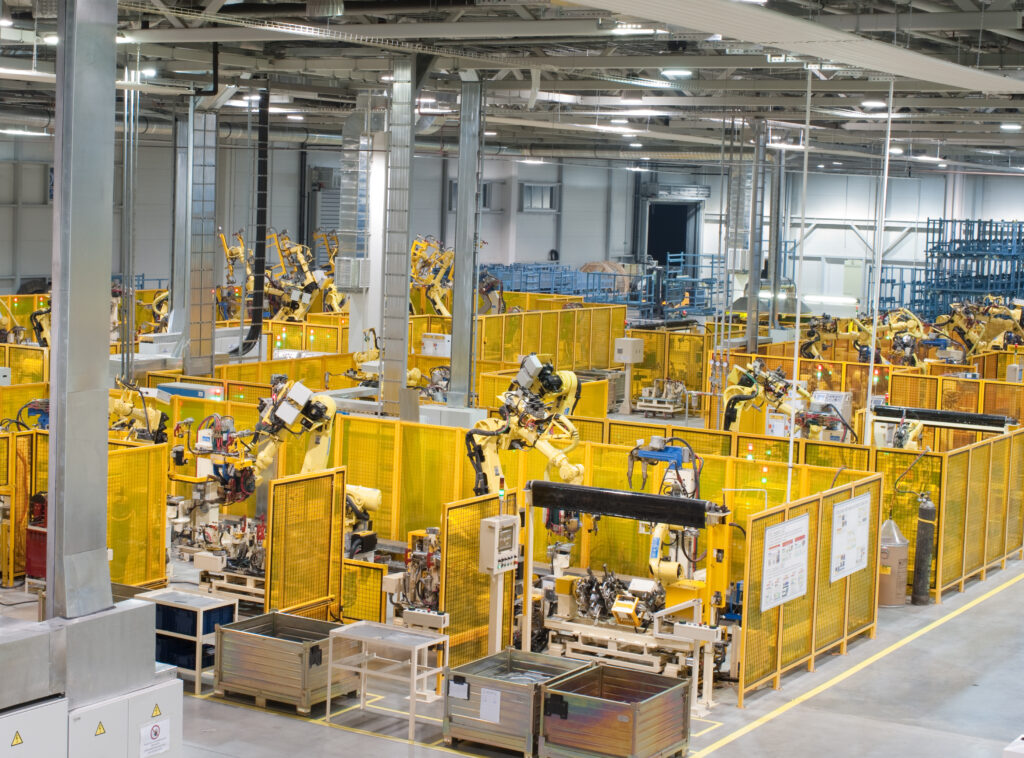
A typical example from practice is a robotic workstation or a semi-automatic line assembled from ready-made components: a robot, conveyors, light curtains, a controller, and software developed in-house. Internally, this is often treated as a “process upgrade” because nothing is being sold to a customer. From a liability perspective, however, what matters is not where it is used, but the technical effect of the integration. If the team creates new operating logic, defines hazard zones around machinery, selects safety functions in industrial automation, and sets the conditions for operator intervention, then it is no longer performing assembly alone. In that case, compliance must be managed as an integral part of the engineering project, with its own decision points and metrics, such as the number of open safety non-conformities before commissioning, the number of design changes after internal acceptance, and the time needed to close out the risk assessment.
Only against that background does the normative reference make practical sense. In 2026, the key distinction for a plant is whether it is dealing with a new machine, an assembly of linked machines, a rebuild of an existing machine, or merely an operational change with no impact on the essential safety requirements. The scope of obligations is not the same in each of these situations, so decisions must not be based on the simplification that “it is for our own use, so manufacturer rules do not apply to us.” If the plant takes actual control of the project and its safety, it must be ready to show the basis on which it considered a given option acceptable. That is what gives this topic its importance today: it is not about a formality at the end of the process, but about choosing a project delivery model that either limits risk and cost or shifts them to the point where correction becomes most difficult.
Where cost or risk most often increases
In projects involving machines built for in-house use, costs rarely rise because of one “major mistake.” Much more often, they build up through a series of decisions made too late or at the wrong level of responsibility. The riskiest assumption is that legal and safety issues can be wrapped up after construction is complete, once the mechanical design and control system are effectively frozen. At that point, any change to guards, safety-related control systems, stop functions, or service access stops being a minor adjustment and starts affecting the schedule, internal acceptance, and the scope of work for suppliers. For the plant, this means not only higher implementation costs, but also a real risk of taking responsibility for a solution that is difficult to justify either technically or organizationally.
In most cases, the problem starts at the project qualification stage. The team treats the project as a modernization or a “process station,” while in reality a new machine or an assembly of machines is being created, with its own control logic, integrated safety functions, and a foreseeable mode of use. If that boundary is identified incorrectly, the rest of the decision path will also be wrong: a different scope of documentation, a different approach to risk assessment, and different requirements for interfaces between devices. The practical criterion is simple: you need to determine who actually decides on the safety architecture, the control concept, and the operating conditions after commissioning. If the answer is “the plant,” there is no point building the schedule as if responsibility remained solely with the suppliers of the individual components.
A good example is a line assembled from standard modules, robots, conveyors, and proprietary supervisory software. At first, the project appears organizationally safe because most of the equipment comes from reputable suppliers. The cost and risk, however, emerge at the integration point: access zones overlap, reset after an emergency stop lacks a consistent logic, and setup and service modes are only being resolved during commissioning. That is when it becomes clear that the declarations and manuals for the individual components do not solve the problem of the complete functional whole. The impact on the project is typical: further rework of control cabinets, software changes, additional guards, extra testing, and delays to handover for operation. It is therefore worth tracking not only the number of non-conformities, but also the number of open safety interfaces between devices and the number of changes to safety functions after the detailed design has been completed. These are indicators that show early on whether costs are starting to rise in the area that is hardest to bring under control.
A second source of losses is dividing responsibility between departments in a way that is organizationally convenient but legally unclear. The mechanical designer assumes a solution, the automation engineer implements it, maintenance adds operating requirements, and no one closes the decision in a single risk assessment referring to the final configuration. In practice, this is exactly when seemingly minor deviations occur: guard switches are selected without reference to the actual stopping time, service overrides have no clearly defined conditions of use, and the internal instruction describes an ideal state rather than the one that exists after changes introduced during commissioning. In 2026, for machines built in-house, this situation is particularly dangerous, because the plant cannot hide behind the argument that “the system was developed in stages.” If it has taken on the role of the entity that actually creates and integrates the solution, it must demonstrate consistency between the essential requirements, the risk assessment, the technical documentation, and the conditions of use. If the project’s legal classification sits at the intersection of several regimes, this must be resolved before ordering critical components, not after start-up. That is the practical decision criterion: does today’s choice reduce the number of design changes after internal acceptance, or does it merely postpone the problem until the point when every correction will already cost twice as much.
How to approach this in practice
In practice, a machine designed for in-house use must be managed as a product for which the plant bears full responsibility for safety and compliance, not as a set of maintenance and automation tasks split across departments. That determines how decisions should be made from the very start of the project. If the team treats the undertaking solely as an “internal upgrade,” questions about the limits of the intervention, the scope of responsibility, and the complete body of evidence supporting the adopted solutions usually come too late. The outcome is predictable: the cost returns at the final stage of the project in the form of guard modifications, changes to the control system, recommissioning, and documentation corrections, while responsibility remains with the plant regardless of how many subcontractors were involved. In this context, understanding the manufacturer’s obligations under Regulation (EU) 2023/1230 helps frame the project correctly from the outset.
That is why the first management decision should not be “what are we buying,” but “who signs off on the project classification, and on what basis.” An in-house project needs a single owner of the decision on the machine’s final configuration: a person or team able to connect the technical function, conditions of use, the way service interventions are carried out, and the legal consequences. A good assessment criterion is simple: can the intended mode of operation, special modes, the limits of human access to hazard zones, and the conditions for stopping and restarting after an intervention be clearly defined today? If not, the project is not ready for ordering critical components or for locking down the control architecture. In that state, every purchasing decision reduces flexibility and increases the risk that safety will later have to be adapted to an already selected solution instead of being designed in parallel with the machine’s function. At this stage, it is also worth considering the appropriate conformity assessment path for the machine.
A typical example is a robotic cell or a line assembled from subsystems sourced from different suppliers. At the concept stage, simple service access is assumed, but testing later shows that adjustment requires more frequent entry into the interior, operation at reduced speed, or temporary disabling of some safeguards under strictly defined conditions. If these scenarios were not identified and assessed earlier, the team starts “adding” exceptions: an extra switch, a bypass, a separate procedure for the technician. This is the point at which both cost and the personal responsibility of those approving the solution increase. Not because the change itself is unacceptable, but because it was introduced outside a closed project risk analysis process and without demonstrating that the final method of use still meets safety requirements. It is therefore worth tracking not only the commissioning date, but also the number of changes affecting protective functions after internal acceptance, the number of open deviations without a decision by the project owner, and the time needed to bring the documentation into line with the actual machine. Many of these issues recur in common industrial machine construction mistakes that only become visible late in the project.
Only against that background do the legal and normative references make sense. In 2026, for machines built in-house, the key issue is not the phrase “for own use” itself, but whether the plant actually designs, integrates, and puts into service a complete solution under its own control. If it does, it must be able to demonstrate consistency between the essential requirements, the risk assessment, the technical solutions, the instructions, and the conditions of use. If the actual situation is more complex, for example involving the rebuild of an existing machine, the integration of several assemblies, or a change in intended use, the classification must be determined before implementation, because the scope of documentation duties and the way conformity evidence is compiled depend on it. From a manager’s perspective, this means one thing: do not postpone deciding the project’s legal status until the commissioning stage. In this area, delay almost always turns into an engineering cost, and engineering cost very quickly becomes a liability risk for the plant. That risk is not abstract, as shown by the potential criminal and civil liability of management for machinery without CE marking.
What to watch out for during implementation
For machines built for in-house use, the biggest implementation mistake is assuming that because the equipment will remain on site, the formal requirements can be “closed out later.” In practice, it is the commissioning stage that reveals whether the project was managed as an engineering undertaking with change control, or as a series of ad hoc decisions made under production pressure. For a plant in 2026, this has direct legal and cost implications: any change to the control logic, guarding, service access, or the operator’s method of work after technical acceptance can undermine the consistency of the earlier risk assessment and documentation. If the team cannot show who approved the change, what its impact on safety was, and whether the instructions still reflect the actual condition, then the issue is not merely organizational. It is a risk that the plant will be held responsible for putting into service a solution whose safety has not been demonstrated in a defensible way. In practice, this often goes hand in hand with avoidable overspending, including the kinds of hidden costs discussed in budgeting for CE certification during a project.
In design, attention is therefore required not only for technical parameters, but also for the limits of decisions that may be made without a renewed assessment. The practical criterion is simple: if a change affects a safety function, the operating sequence, human access to the hazard zone, setup mode, maintenance, or the intended use, it should not be treated as a routine commissioning adjustment. Such a change requires a decision by the project owner, a risk review, and verification that the evidence of conformity is still valid. From a scheduling perspective, this means the safety architecture must be finalized before production start-up, not after it. If the plant fails to do this, the cost comes back twice: first as electrical or mechanical rework, then as downtime, additional acceptance activities, and a dispute over responsibility between automation, maintenance, and the project manager. Where the machine is part of a broader automation effort, this should be aligned with a sound approach to production process automation.
A typical practical example is an internally built station consisting of a robot, conveyor, and feed system that was initially intended to operate without operator intervention, but after trials is allowed to be manually replenished with parts during automatic operation. From the project perspective, such a decision is often presented as a minor productivity optimization. In reality, it changes the conditions of use, the way access to the work zone is provided, and the requirements for protective measures and control. If the team treats this as a local improvement without a formal review, a situation may arise in which the operating instructions describe one method of use, the risk assessment another, and actual operation yet another. Such a mismatch increases the cost of maintaining and defending technical decisions, because any later failure, near-miss, or inspection will be assessed against the actual condition, not the original design intent. This is precisely why robust machine operating manuals must reflect the final, real-world configuration.
Only against this background does it make sense to address the legal requirements. For in-house machines, it is not enough to believe that the plant is “only the user” if in fact it designed, integrated, or materially modified the solution itself and put it into service. In such a case, what matters is the ability to demonstrate that the essential requirements have been translated into specific technical and organizational measures. Where the project status is borderline, for example involving the rebuild of an existing machine or the integration of several devices into a new functional whole, the decision must be based on the actual facts, not on the project name or the purchasing structure. For the team, the practical measure of implementation maturity is this: before start-up, can it identify without additions the current scope of the machine, the approved risk assessment, the list of changes after testing, the conditions for safe operation, and the person responsible for accepting deviations. If not, the implementation is formally and operationally incomplete, even if the machine is already running a production cycle. Where this leads to formal release for use, the documentation package may also need to include a declaration of conformity for the machine or industrial automation system and, where applicable, a justified decision on CE marking and when it is required.
In-house machines and the plant’s legal obligations in 2026
You cannot base decisions on the assumption that if the machine is not being sold, the “manufacturer’s” obligations do not apply. What matters is the technical effect of the integration and who actually controls the design and safety.
When a plant creates new operating logic, defines hazard zones, selects safety functions, and sets the conditions for operator intervention, this is no longer just assembly. At that point, compliance must be managed as part of the engineering project.
It must be clarified who decides on the safety architecture, the control method, and the operating conditions after commissioning. If that is the plant, the schedule and scope of work should not assume that responsibility rests solely with the component suppliers.
When safety and compliance are addressed only after construction is complete, the mechanical design and control system are already “frozen,” and any change becomes costly and affects the schedule. Typical consequences include reworking guards, modifying the control system, additional testing, and delayed commissioning.
Problems arise at the interfaces: overlapping access zones, no consistent reset logic after an emergency stop, and setup and service modes being refined only during commissioning. Component declarations and instructions do not automatically resolve the risks of the functional whole.