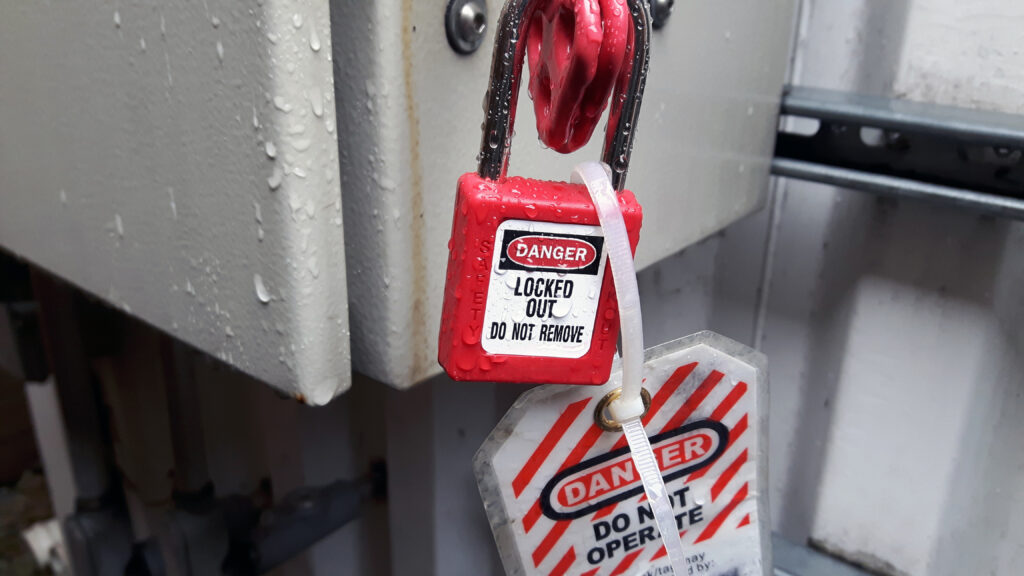

Key takeaways:
The article presents LOTO as a key element of occupational health and safety policy in industry, based on lockout devices, tagging, and energy isolation procedures. It highlights the role of training and regulatory compliance in reducing accidents.
- Lockout Tagout (LOTO) reduces the risk of incidents caused by the unintended release of energy during servicing and repairs.
- Lockout is a physical lock that prevents restart, while Tagout is labeling that indicates the status and hazard.
- Safety labels support effective risk communication and raise hazard awareness among employees.
- LOTO covers the isolation of various energy sources, including electricity, pressure, and gas, as well as the controlled removal of lockout devices after the work is completed.
- Implementing LOTO, together with training, strengthens the safety culture and can reduce downtime and financial losses.
Each year, numerous incidents caused by the unintended release of energy are recorded worldwide. Implementing safety procedures such as Lockout Tagout (LOTO) could prevent most of them. This system—a set of rules and protective measures—is designed to protect personnel from hazards generated by process equipment. Safety labels play a key role here by warning of potential danger. Using LOTO is not only a legal requirement, but above all a deliberate step toward eliminating accidents and the financial losses associated with them.
Summary of Key Information
- The Lockout Tagout system as a strategic element of occupational safety policy.
- The role of safety labels in effective risk communication.
- The importance of Lockout Tagout procedures in preventing accidents and improving safety.
- The impact of the LOTO system on safety culture and the optimization of production processes.
- The application of LOTO procedures in the context of compliance with legal requirements.
Introduction to the Lockout Tagout System
The Lockout Tagout system is a fundamental part of promoting workplace safety. Implementing these procedures, which requires strict adherence to lockout tagout principles, is intended to protect personnel from hazards arising during work on machines and equipment. It is worth noting that the importance of these procedures extends far beyond standard protocols, becoming a key element of maintenance and repair work.
Definition and primary objectives of the LOTO system
Lockout Tagout procedures within the LOTO system describe a set of guidelines established to isolate machines and equipment from all energy sources, ensuring comprehensive safety for employees involved in servicing. In this context, “Lockout” means physically preventing the equipment from being re-energized, while “Tagout” refers to the use of labels that indicate the technical status of the equipment. Maximizing safety and eliminating hazards are the primary objectives of these procedures.
The importance of Lockout Tagout in accident prevention
When discussing Lockout Tagout procedures, we are addressing a key pillar of workplace protection. They make it possible to eliminate serious incidents that could occur as a result of uncontrolled energy use or a lack of hazard awareness among staff. Careful implementation of LOTO procedures has a major impact on reducing unexpected incidents while also strengthening the safety culture in any organization.
The Role of Lockout Tagout in Industrial Safety
In industry, implementing emergency procedures is essential for effective management of workplace risk. The Lockout Tagout (LOTO) system plays a central role in safety strategy, particularly by preventing the uncontrolled release of energy. Proper equipment labeling and the use of LOTO procedures effectively reduce the number of accidents and machine failures.
Strict workplace safety standards not only reduce accidents, but also improve operational efficiency. LOTO procedures allow machines to be systematically isolated during maintenance or repair, which reduces downtime and its economic impact.
Implementing the LOTO system ensures the safety not only of employees, but also of companies’ technical infrastructure. – Ministry of Development and Technology
The table below shows how proper equipment labeling and implemented emergency procedures minimize workplace risk:
| LOTO system element | Impact on workplace risk | Benefits |
|---|---|---|
| Mechanical lockout | Eliminates accidental machine start-up | Reduces the number of accidents |
| Equipment labeling | Raises employee awareness of existing risk | Improves safety and workplace culture |
| Emergency procedures | Rapid response in the event of danger | Optimizes response time and limits the effects of failures |
| LOTO training | Improves employee competence | Increases overall operational efficiency |
The Lockout Tagout system goes far beyond a standard set of procedures, serving as a foundation for protecting human life and property against unforeseen hazards. Providing employee training and implementing systematic equipment labeling significantly improve both safety and the economic efficiency of businesses.
How Lockout Tagout protects against the release of uncontrolled energy
Reliable machine lockout plays a critical role in industrial safety. Its purpose is to prevent accidental energy release, which can potentially lead to catastrophic consequences. Lockout Tagout represents a comprehensive approach that includes procedures for isolating energy sources. At the same time, an integral part of the process is the removal of lockout/tagout devices after servicing or maintenance activities have been completed.
Identifying hazards related to improper energy handling
LOTO procedures are introduced to identify and assess the risks associated with operating machines and equipment. The priority is to accurately identify hazards that may arise from unintended machine start-up during maintenance or repair work.
Controlling risk: electricity, pressure, gas, and more
- Electricity: proper machine lockout together with isolation of power sources
- Pressure: implementation of safeguards to protect against uncontrolled release of mechanical energy
- Gas: use of flow isolation procedures and tagout lock removal
Providing employees with high-quality training is essential. They must be able to isolate and lock out machines effectively. They must also understand how to apply LOTO procedures strictly, in line with the specific working conditions and the different types of energy involved.
The Lockout Tagout program must be continuously monitored and updated regularly. Only this approach ensures that all procedures are followed consistently. The effectiveness of implementation must be maintained at every stage of the work process.
Key Components of an Effective Lockout Tagout System
High standards in safety procedures require a precise review of every aspect of the Lockout Tagout system. Core elements such as high-quality LOTO devices and clear safety labels are not merely a matter of legal compliance. They are the foundation for ensuring worker safety.
An effective Lockout Tagout system relies on essential elements:
- Use of durable mechanical locking devices,
- Safety labels with easy-to-understand markings,
- Regular inspections and audits of LOTO equipment within the organization.
When reviewing these components, emphasis should be placed on reliable, periodic equipment testing and regular procedure updates. Each element requires detailed verification in terms of usability, condition, and method of application.
Lasting workplace safety depends on a continuous understanding that safety procedures evolve and therefore require ongoing attention and adjustment to current working conditions.
| Component | Application | Benefits |
|---|---|---|
| Safety padlocks | Energy source isolation | Resistance to external exposure |
| Warning tags | Communication of equipment status | Clarity of message |
| Universal lockout devices | Protection for a variety of machines | Versatility of use |
| Safety labels | Documentation of LOTO procedures | Durability and excellent visibility |
These components, supported by systematic staff training, create not only an efficient LOTO system. They also build a safety culture across the workplace.
Implementing practical methods and correcting potential gaps helps ensure that safety rules become part of the daily responsibilities of every employee, regardless of role.
Organizational and technical aspects of Lockout Tagout
Implementing a Lockout Tagout system is of key importance in shaping a company’s safety culture. Proper management of workplace risk through effective emergency procedures minimizes the risk of incidents while raising safety levels by integrating preventive practices into the company’s daily operations.
Integrating LOTO into organizational culture
The commitment of both management and staff is the foundation for effective integration of Lockout Tagout procedures into operational routines. Embedding these emergency procedures into the company’s values and mission makes safety a strategic priority.
Impact on communication and cooperation between employees
Lockout Tagout (LOTO) significantly strengthens effective communication and cooperation in the workplace. Systematic educational activities on workplace risk help create an environment in which every employee is both a beneficiary and a co-creator of emergency procedures.
Clear emergency procedures have a significant impact on how managers and employees approach the identification of hazards in the workplace. This system is not just a set of rules, but above all an element of safety culture shared by the entire team.
- Building awareness of emergency procedures and workplace risk
- Providing clear, understandable information on safety rules
- Taking responsibility for safety at both the individual and group level
With comprehensive commitment and collaboration across the organization, the Lockout Tagout system can evolve from a set of procedural instructions into an integral part of the company’s safety culture.
Lockout: The role of mechanical safeguards in energy isolation
Specialized safety procedures in industrial environments rely heavily on the Lockout system. Based on mechanical safeguards, this system isolates equipment from access to energy sources and is a key measure for protecting personnel. The reliability and effectiveness of the Lockout system are closely tied to the correct selection and use of appropriate equipment. This makes it possible to lock out machines effectively and protect workers from uncontrolled energy release.
Proper selection and use of lockout equipment
When implementing safety procedures, employers are required to provide appropriate technical measures tailored to the specific needs of each facility. Equipment used for lockout—such as padlocks, safety devices, and blocking mechanisms—must be easy to use and reliable. This is essential to ensure they perform their intended function consistently in critical situations.
Color coding and clear procedures
Color coding in the Lockout system goes beyond appearance and delivers practical benefits. By using different colors, individual components can be identified more quickly, which directly improves the clarity of safety procedures. Clear procedures help employees respond faster in critical situations and can prevent unwanted incidents in the workplace.
| Color | Application | Energy type |
|---|---|---|
| Red | Permanent energy sources | Electricity |
| Yellow | Temporary disconnections | Pneumatic and hydraulic |
| Blue | Repair areas | Mechanical |
| Green | Employee personal protection | Various |
Tagout: The role of informational warning tags
As a core part of the Tagout procedure, safety labels and equipment marking play a key role. They provide essential guidance on the technical status of machines. As a result, Tagout rules do more than improve safety. They also support a high level of organization and clear communication in the workplace.
Tagout is more than a simple label—it is an advanced communication system that provides information and protection.
Let us take a closer look at the functions that safety labels and equipment marking perform during machine operation.
- They present key information about the machine and its potential hazards
- They warn that special caution is required
- They indicate that the machine is currently out of order and not fit for use
It is essential that every label is legible and easy to understand for both technical staff and people who do not operate machines directly.
| Tag color | Meaning | Example of use |
|---|---|---|
| Red | Removed from service | Technical failure requiring intervention |
| Yellow | Caution, technical inspection | Planned maintenance downtime |
| Green | Machine operational, ready for work | Completion of service work |
Careful updating of information on safety labels is recommended whenever the machine status changes. This helps prevent misunderstandings or mistakes caused by outdated information.
Equipment marking is also crucial when onboarding new team members. It allows them to understand the current status of machines immediately, significantly reducing the risk of incidents related to improper operation.
Implementing an effective Tagout system not only meets occupational safety requirements. It also reflects a commitment to a safe and informed working environment for all employees.
Lockout Tagout principles and procedures
Properly implemented Lockout Tagout (LOTO) procedures are the foundation of life protection and the reduction of occupational risk. Their precise execution ensures that the team understands the response mechanisms adopted for situations requiring intervention. Thoroughly familiarizing employees with the rules specific to a given work environment is therefore essential.
The importance of detailed instructions for different work scenarios
The diversity of workstations requires Lockout Tagout procedures to be adapted accordingly. These instructions must be not only precise but also accessible, so that responsibilities are fully understood. This includes information on the location of control points, techniques for effectively securing machines, and rules for using tagout markings.
From design to implementation: Costs and benefits
Implementing a Lockout Tagout system involves financial outlay. This includes purchasing lockout devices, training personnel, and allocating time to revise internal procedures in line with procedural guidelines. However, it is worth noting that investing upfront helps reduce the risk of accidents, limit potential production losses, and avoid compensation costs for employees. These factors support long-term profitability and raise workplace safety standards.
Roles and responsibilities in the Lockout Tagout procedure
Effective LOTO training and clearly defined safety rules for Lockout Tagout (LOTO) are the foundation for improving safety in the workplace. Providing employees with broad knowledge and practical skills so they can respond appropriately in emergency situations is essential to maintaining a high level of protection.
How to authorize and train employees
The process of authorizing personnel to use LOTO procedures begins with comprehensive LOTO training. This training combines theory and practice related to the safe operation of equipment. Training programs should be updated regularly so they reflect current standards and technologies.
The importance of effective emergency response
Effective response in a crisis is possible only when an employee not only knows the safe operating rules but also has practical experience in carrying out emergency actions. For this reason, regular hands-on sessions and emergency drills are an integral part of training programs.
| Type of training | Scope | Frequency |
|---|---|---|
| Basic LOTO training | General principles, energy identification, mechanical lockout devices | At hiring and when changing positions |
| Refresher training | Review of principles, new procedures, knowledge updates | At least once a year |
| Specialist training | Advanced lockout techniques, specialist safeguards | As needed and when innovations are introduced |
Building a safety culture in which LOTO training underpins every employee’s actions effectively minimizes the risk of accidents and failures. The consistent presence of safe operating rules in the team’s daily work habits is decisive for the effectiveness of the procedures in place.
Review and update of Lockout Tagout procedures
To maintain the highest standards of safety procedures, regular reassessment of LOTO procedures is essential. In light of rapid technological change and evolving legal requirements, only a systematic and thorough review can ensure their effectiveness.
A comprehensive review requires attention to both technical and organizational aspects. Vigilance and continuous updating are essential here.
There is no greater safety measure than constant vigilance. A review of LOTO procedures is not only a matter of compliance with legal requirements, but above all a commitment to employee well-being.
The most important stages of a LOTO system review are:
- Analyzing current safety protocols and identifying areas for improvement.
- Making sure all equipment is properly marked and has up-to-date safety labels.
- Providing regular employee training on safety procedures.
- Analyzing emergency cases and accidents that have occurred and drawing conclusions from them.
| Area | Factors to review | Recommended actions |
|---|---|---|
| Official regulations | Current standards and regulations | Implementing changes in line with new guidelines |
| Changes to equipment | New machines or modifications to existing ones | Adapting LOTO procedures to new conditions |
| Employee training | Level of knowledge of safety procedures | Regular updates and training workshops |
| Incident analysis | Assessment of the causes and consequences of accidents that occurred | Optimizing procedures to prevent future incidents. |
For a Lockout Tagout system to remain effective, a systematic approach to the review of LOTO procedures is necessary. Both external requirements and internal changes in technologies and processes should be taken into account.
Training as a key element of the LOTO system
Developing and reinforcing safety awareness at the workstation is essential. LOTO training plays a leading role in this context. The knowledge provided enables employees to identify and manage workplace risk. The result is fewer incidents and a higher overall level of safety.
Raising risk awareness and the practical aspects of applying LOTO
Training in LOTO procedures must be both accessible and engaging. The goal is for every employee to fully understand the required procedures and apply them correctly. Training focuses on realistic scenarios that may arise in day-to-day work. This helps participants learn to recognize workplace risk and respond appropriately.
Regular knowledge and procedure refreshers
The workplace is evolving, and so are the hazards that come with it. That is why it is essential to keep employees’ knowledge and skills up to date through LOTO training. Regular refreshers on procedures and the introduction of new solutions are just as important as initial training. This helps maintain the highest safety standards.
Delivering effective LOTO training is an investment in safety. It brings benefits not only by minimizing workplace risk, but also by building a strong safety culture across the organization. A safe workplace is the foundation of every company’s success.
The importance of employee involvement in the LOTO process
Implementing the Lockout Tagout (LOTO) system goes beyond procedures and equipment, because the human factor is critical. Employee involvement in its procedures is fundamental—from their development and improvement to their day-to-day application. These employees provide an essential safeguard against hazards caused by the uncontrolled release of energy. Their knowledge, awareness, and sense of responsibility directly affect the effectiveness of lockout tagout procedures and the level of safety in the work environment.
Employers and managers are responsible for providing teams with appropriate safety labels and a thorough understanding of how to use them. Only then can employees have a real impact on shaping safety policy through participation in regular training and involvement in decision-making processes. This allows them not only to gain a deeper understanding of LOTO mechanisms, but also to respond effectively to emerging hazards.
The success of a LOTO system depends not only on how well its procedures and mechanical measures perform. It also depends on effective communication between employees and management, as well as on the commitment of each individual worker. Although up-to-date lockout tagout procedures and clearly visible safety labels are essential, the human factor plays the decisive role. It determines how effectively the system works in practice and defines the level of safety at the workstation.
Lockout/Tagout Procedures – Workplace Safety
Lockout Tagout is a set of procedures for isolating machines and equipment from all energy sources during servicing or repair. “Lockout” means physically preventing restart, while “Tagout” means labeling to indicate the status and hazards.
The aim is to maximize personnel safety by eliminating the risk of unintended energy release. The procedures are intended to prevent accidental start-up of equipment during maintenance and repair work.
Labels warn of potential hazards and indicate the technical condition of the equipment. They support effective communication of risk among employees.
LOTO covers hazards related to electricity, pressure, gas, and other energy sources, among others. The procedures focus on risk identification and on isolating and locking out energy sources.
High-quality training builds competence in the effective isolation and lockout of machinery in accordance with procedures. The LOTO program should also be monitored and updated regularly to ensure consistent application of the rules.