
Key takeaways:
The text describes the legal, financial, and organizational consequences of placing on the market or putting into service a machine without CE marking in the EU. It highlights occupational safety risks and potential issues with insurance.
- An EU manufacturer must ensure compliance with the Machinery Directive 2006/42/EC; CE marking confirms that the minimum occupational health and safety requirements have been met.
- Conformity assessment includes risk analysis, technical documentation, and testing; in some cases, the involvement of notified bodies is required.
- The user of a machine without CE marking also bears responsibility, especially in the event of accidents; they should verify compliance with current standards.
- Failure to bear the CE marking may result in inspections by supervisory authorities, withdrawal of the machine from the market or its removal from service, fines, and production downtime.
- The insurer may refuse to pay compensation after an accident or breakdown, and the costs of damage and claims may be borne by the company
Responsibilities of manufacturers and users
A machine without CE marking can have very serious consequences. A manufacturer placing a machine on the European Union market is required to ensure compliance with the requirements of the Machinery Directive 2006/42/EC. CE marking is a key part of this process, as it confirms that the machine has undergone the necessary checks and meets the minimum health and safety requirements. This process includes a risk assessment, preparation of technical documentation, and carrying out the relevant conformity assessment activities, which may require the involvement of notified bodies.
Even though the user of a machine without CE marking is not its manufacturer, they also carry legal responsibility. If a machine is used within the European Union without the appropriate certification, the user exposes themselves to serious legal consequences, especially in the event of workplace accidents. It is the user’s duty to ensure that every machine they operate meets current safety standards. Missing CE marking may result in the machine being taken out of service, financial penalties, or even a shutdown of the facility’s operations. In addition, users may be required to bring the machine into compliance with legal requirements themselves, which involves additional costs and production downtime.
A machine without CE marking – Legal consequences
Placing a machine on the market or operating it without CE marking within the European Union involves serious legal consequences. Non-compliance with the Machinery Directive 2006/42/EC may lead to substantial financial penalties for both the manufacturer and the user. Market surveillance authorities have the right to carry out inspections and, if non-compliance is found, may require the machine to be withdrawn from the market immediately or brought into line with applicable requirements.
In the event of an accident involving a machine without CE marking, legal liability rests not only with the manufacturer but also with the user. If it is demonstrated that the machine did not meet safety requirements, the user may face criminal liability, particularly in cases of serious injury or an employee’s death. In addition, companies may be forced to cover compensation costs for injured parties and to repair damage resulting from the use of a machine without CE marking. In the worst case, the business may be forced into liquidation, and responsible individuals may face personal consequences, including imprisonment.
A machine without CE marking – Consequences for workplace safety
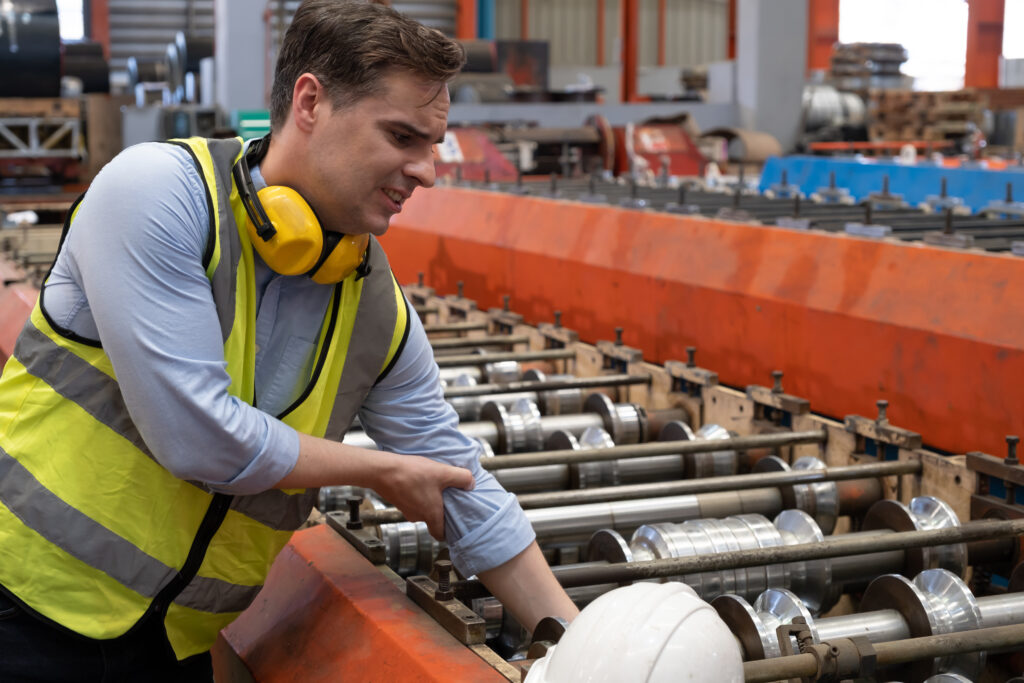
Machines without CE marking often fail to meet key safety requirements, creating a real threat to employees’ health and lives. Lack of certification means the equipment has not been assessed for conformity with safety requirements, increasing the risk of failures such as unexpected stoppage, missing proper guarding of moving parts, or defective control systems. Employees are exposed to direct risks when operating machines with an unknown level of protection.
In the workplace, using machines without CE marking can lead to serious accidents, including permanent injuries or even death. What’s more, when a machine fails, the employer faces not only production downtime but also liability for potential claims related to workplace accidents. It is also worth noting that such equipment may generate higher operating costs due to frequent breakdowns, which negatively affects the facility’s efficiency.
A machine without CE marking – Consequences for insurance
A machine without CE marking represents a significant risk from an insurer’s perspective. If an accident or failure involves such a machine, insurance companies may refuse to pay compensation, arguing that the machine did not meet minimum safety requirements. Insurance policies typically cover only equipment that complies with applicable standards, and the absence of CE marking can result in a complete loss of insurance protection.
In addition, in the event of serious property damage or workplace accidents, the cost of repairs and medical treatment for injured persons may fall directly on the company. In extreme cases, the company may be forced to cover not only repair costs but also compensation for injured employees, which can have a drastic impact on its financial stability. A lack of CE certification therefore leads not only to legal issues, but also to serious challenges in risk and financial management.
Financial consequences
The absence of CE marking on a machine carries significant financial consequences. Companies that operate machines without certification may be required to incur high costs to bring the equipment into compliance with the requirements of the Machinery Directive. This process includes a conformity assessment, preparation of new technical documentation, and any necessary modifications to ensure the machine meets safety standards. These costs can significantly exceed the original purchase price of the equipment, especially if the machine requires major upgrades.
Additionally, using a machine without CE marking can lead to unplanned production downtime, for example due to a breakdown or a decision by inspectors who may order the machine to be taken out of service until it is brought into compliance. Losses resulting from downtime, as well as the costs of any administrative penalties, can place a significant burden on the company’s budget. In extreme cases, the business may be forced to purchase new equipment, which involves even greater expenditure.
| Type of consequence | Description | Examples and penalty amounts |
|---|---|---|
| Legal | Imposition of financial penalties by labour inspectors or other supervisory authorities. In the event of an accident, criminal liability for the health and lives of employees. | In Poland, the financial penalty for placing a machine on the market without CE marking may amount to several hundred thousand zloty. In the EU, amounts can reach 500,000 EUR, and even imprisonment for gross safety violations. |
| Financial | Costs of bringing the machine into CE compliance, production downtime, and potential compensation for injured employees. | Costs of bringing a machine into CE compliance: from several to tens of thousands of zloty (depending on the machine). Downtime-related losses can reach tens of thousands of zloty per day. |
| Workplace safety | Increased risk of accidents due to the lack of certified safeguards, e.g., guards, emergency stop devices, technical condition monitoring systems. | Lack of CE marking can lead to serious accidents (amputations, death), which in extreme cases may involve criminal liability, e.g., imprisonment for those responsible. |
| Insurance | Possibility that the insurer will refuse to pay compensation due to the machine’s non-compliance with CE requirements, requiring the company to cover the full cost of a failure out of pocket. | Insurers often require CE marking as a condition of coverage. Without CE, full financial liability falls on the company. Compensation costs can reach millions of zloty. |
| Reputational | Loss of trust among employees and contractors, negative impact on the company’s image, risk of losing key contracts. | Public reports of non-compliance can deter contractors. The company may lose contracts worth hundreds of thousands or millions of zloty. |
Alternatives to machines without CE
If a company has a machine without CE marking, there are several options to bring it into compliance. One option is to certify the used machine. This process involves a detailed analysis of conformity with the requirements of the Machinery Directive, which may include technical modifications, adding missing safeguarding components, and preparing technical documentation and a declaration of conformity.
In some cases, bringing a machine into CE compliance may be more cost-effective than replacing it, especially when the machine is in good technical condition or is critical to production processes. However, the company must be aware that certifying a used machine involves costs and may require cooperation with a notified body. Alternatively, the company may consider purchasing new equipment that already bears CE marking, thereby eliminating the legal and financial risks associated with using a machine without certification.
Machine without CE – consequences
The manufacturer placing a machine on the EU market is required to ensure compliance with the Machinery Directive 2006/42/EC and to carry out a conformity assessment. The user is also responsible for ensuring that the machine in operation meets the current safety requirements.
This may result in an inspection by market surveillance authorities and an order to immediately withdraw the machine from the market or bring it into compliance. High financial penalties may also be imposed, and in the event of an accident, criminal liability is possible.
Liability may apply to both the manufacturer and the user, especially if the machine did not meet safety requirements. The company may be required to pay compensation and cover the costs of damages.
The absence of CE marking means that the machine may not have undergone conformity assessment against the safety requirements, which increases the risk of failures and accidents. Typical hazards include, among others, missing guards, improper control, or unpredictable stops.
The insurer may refuse to pay compensation after an accident or failure, arguing that the minimum safety requirements have not been met. In addition, there may be costs for bringing the machine into compliance, production downtime, and administrative penalties.